
Built for products that sell more than once. TWICE's inventory management system is serialized by default, giving every item in your operation its own identity.
Most inventory systems count products. TWICE tracks units. Every stock item gets its own record with a unique item code, and from that point forward, TWICE captures everything that happens to it — what it cost, what it earned, where it went, and what condition it came back in.
Every stock item in TWICE is individually tracked from day one. Each unit carries its own item code, condition record, location, and status. For high-volume consumables, you can switch to pooled mode and manage quantities under a single record.
TWICE records revenue and costs at the unit level. Income flows in automatically from orders. Expenses are captured from purchase price, maintenance, repairs, and manual entries.
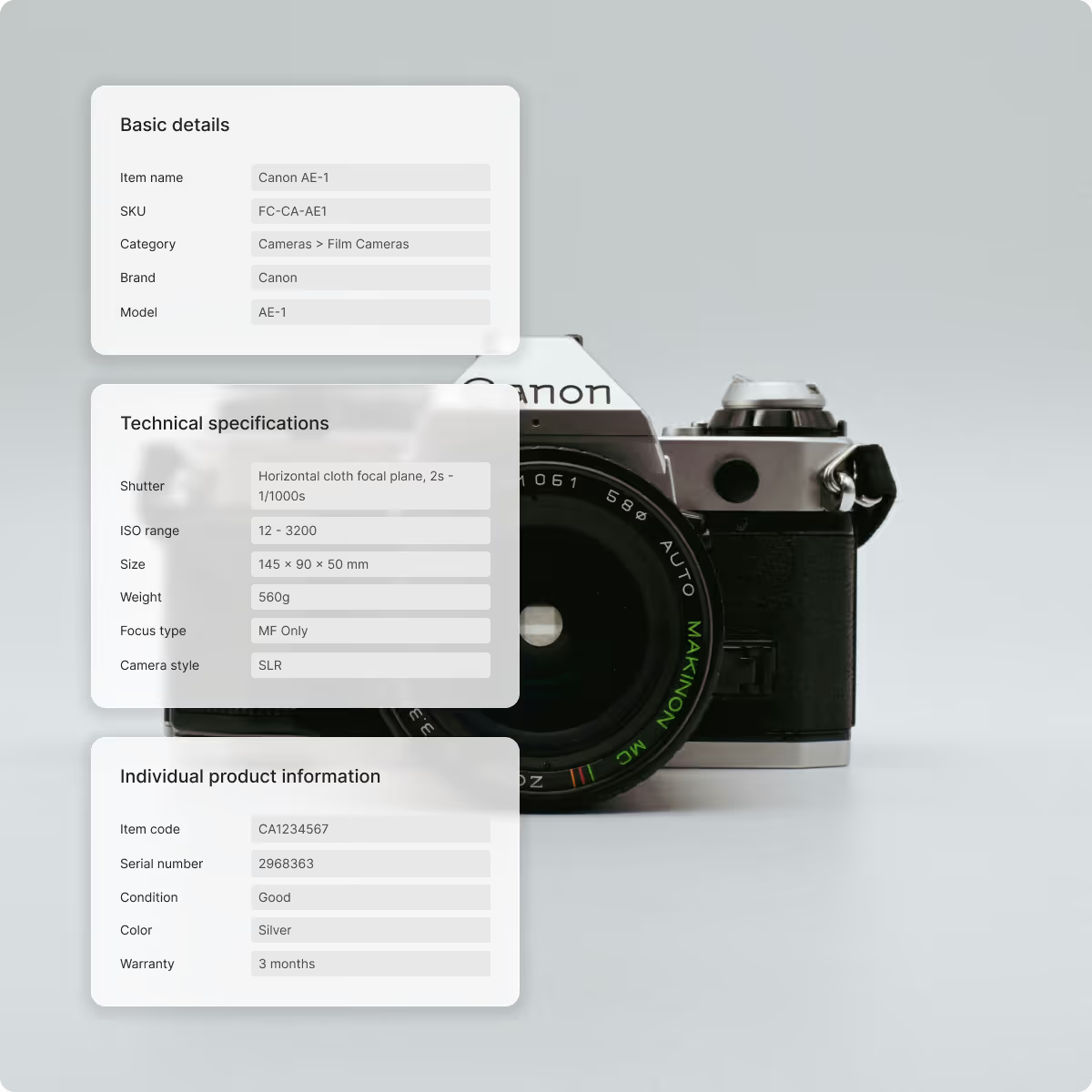
Define shared properties once at the SKU level — brand, type, size, default pricing — and every linked stock item inherits them automatically. Item-specific data like serial numbers, condition, or exact measurements stays unique to each unit.
TWICE automatically calculates whether each item is available or committed based on active orders and reservations. Available-to-sell quantities update in real time across every channel, so your team don't have to worry about double-bookings or overselling.
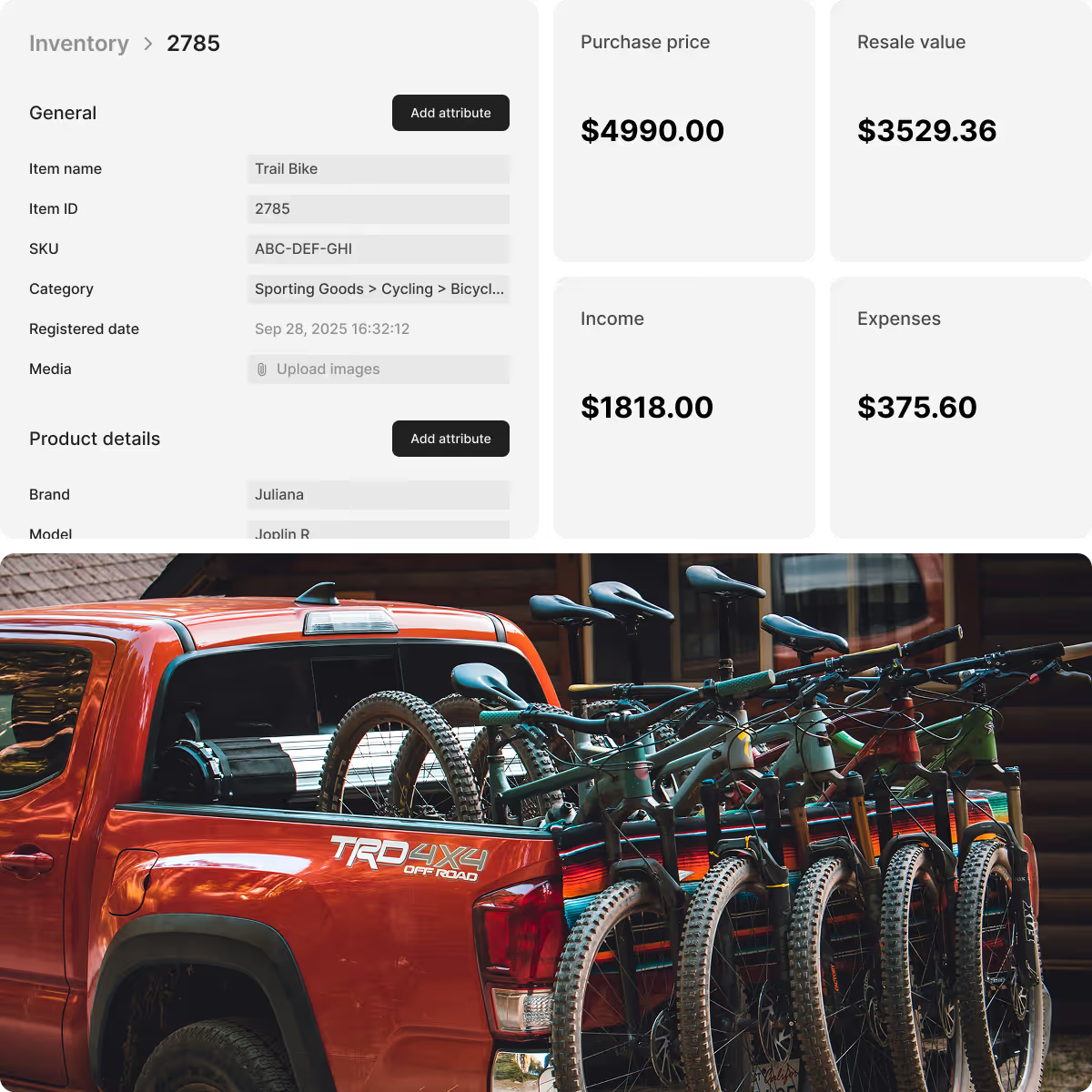
Every operation tracks different things. A bike rental company cares about frame size and service intervals. A vintage clothing store cares about fabric and condition grade. TWICE doesn't assume what matters to you — it gives you the tools to define it yourself.
Create attributes for any data point your business needs. Text, numbers, currency, dates, select lists, multi-select, file attachments, yes/no toggles — you name it. Structure your data the way your business works by applying attributes to stock items, listings, customers, or orders.
Build calculated fields that update automatically when source data changes. Combine system attributes like purchase price, age, usage hours, and income with your own custom fields to derive residual values, resale prices, depreciation rates, or any metric your business runs on. One formula, applied globally, calculated per item.
SKU-level attributes define what's shared across a product line — brand, category, standard specs. Stock item attributes capture what's unique to each unit — serial number, exact condition, individual measurements. Both appear on the stock item record. You decide where each data point lives.
Classify inventory using a standardized product taxonomy. Start broad, drill down to the most specific subcategory that fits. Categories power reporting, filtering, and integration compatibility — giving your inventory a consistent structure even as it grows.
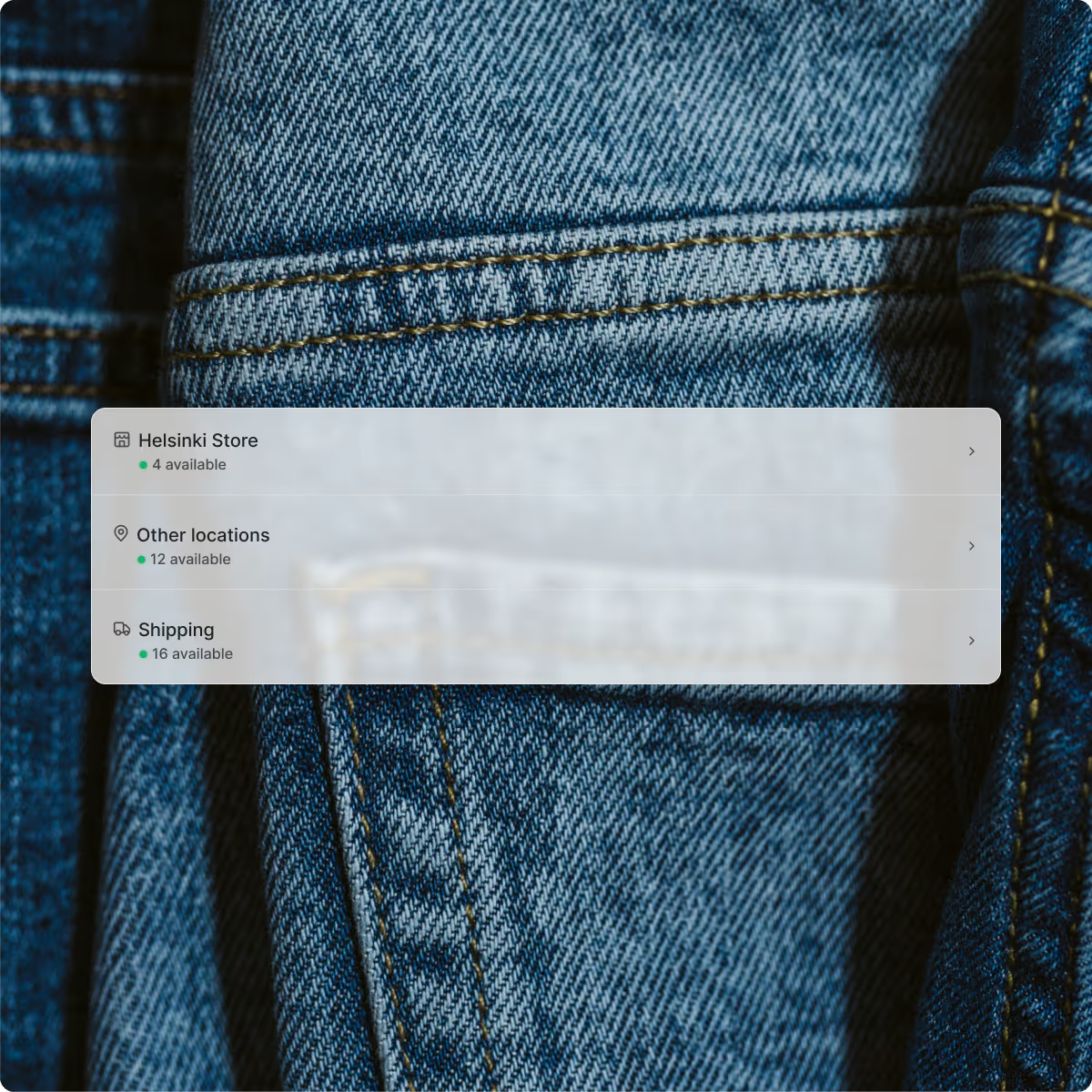
Every stock item is assigned to a specific location with its own stock levels, availability, and operational rules. Whether you run one location or twenty, TWICE reflects how your inventory is actually distributed.
See exactly what's available at each location in real time. Stock levels, item statuses, and availabilities are location-specific. Filter your inventory view by location to work with only what's relevant, or zoom out for a cross-location overview.
Each location operates on its own terms. Set operating hours, tax rules, and fulfillment methods per location. TWICE applies the right rules automatically based on where the order is being fulfilled.
Items can be fulfilled from one location and returned to another. When a rental business redistributes fleet across locations based on seasonal demand or a resale operation routes sourced items through grading and refurbishment cycle before they hit the sales floor, TWICE tracks the movement and updates stock levels at both ends.
When customers browse your catalog, TWICE shows availability based on actual stock at relevant locations. Customers see where items are available and which fulfillment options apply — pickup, delivery, or shipping.
Every asset that passes through your operation accumulates history. Whether it's a rental unit cycling for years or a pre-loved resale item moving from sourcing to sale in a week, TWICE captures that history automatically. Every order, reservation, change, and expense is recorded and organized on the item timeline.
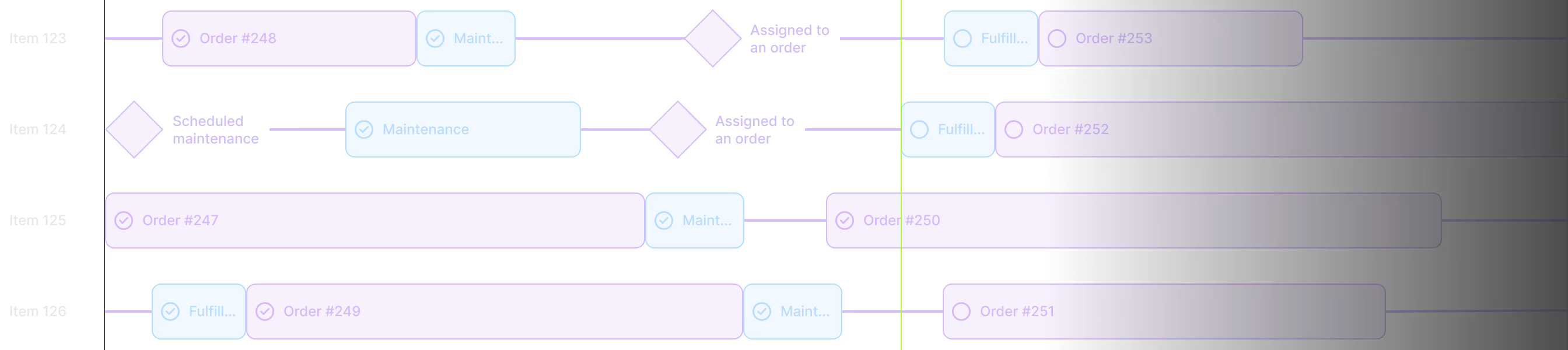
Every stock item has a chronological record of everything that's happened to it. Orders, reservations, maintenance blocks, and manual notes appear on a single timeline. See past events, current commitments, and scheduled activity in one view.
TWICE logs every action taken on a stock item — what changed, when, and by whom. Whether you need it for internal accountability, regulatory compliance, or just figuring out who changed the status on item #4721 last Tuesday, the log is there.
Link certificates, inspection reports, manuals, warranties, receipts, or any file directly to a stock item. You can optionally share specific documents with customers — like a user manual for a rented item or a Certificate of Authentication for a resale purchase.
See availability in a calendar view. Identify availability gaps, spot scheduling conflicts, and plan ahead, whether that means maintenance windows for rental fleets or staging timelines for resale inventory.
“If we didn’t have such good tools, it would be much more difficult for me to run the business on my own.”

A stock item is an individual physical unit — one specific bike, one specific jacket, one specific camera. An SKU is a product template that groups similar items together. You define shared attributes at the SKU level (brand, type, size) and they cascade to every linked stock item. Each stock item still maintains its own unique data: item code, condition, income, expenses, and timeline.
No. TWICE supports both serialized and pooled inventory. Use serialized tracking for items where individual history matters, such as expensive equipment, unique vintage pieces, and rental assets. Use pooled tracking for high-volume consumables like accessories or packaging where you just need a quantity count. You can mix both methods in the same account.
Attributes are custom data fields you define for your inventory. Formula attributes take it further — they calculate values automatically based on other attributes. For example, you can create a formula that derives residual value from purchase price, age, and usage hours. When any input changes, the formula recalculates. Use formulas for depreciation, custom inventory valuation, resale pricing, or any metric that depends on other data points.
Every view and edit action on a stock item is logged with the user who performed it and a timestamp. This includes changes to attributes, status updates, location changes, and document modifications. The log is immutable, meaning entries can't be edited or deleted.
In practice, this means you can trace accountability when something looks off (who changed the status on item #4721 and when), demonstrate compliance for audits or insurance claims, and resolve internal disputes with facts instead of guesswork. The longer your assets stay in circulation, the more this history pays for itself.
Every stock item in TWICE has its own documents tab. You can link files, such as certificates, inspection reports, manuals, warranties, condition photos, receipts, etc. directly to a specific unit rather than storing them in a separate system or a shared folder.
This matters because in circular commerce, documentation is unit-specific. A safety certificate belongs to one piece of equipment, not the product line. A condition report documents the state of one item at one point in time. A warranty applies to the exact unit a customer purchased or rented. When files live on the item record, anyone on your team can find the right document instantly, and you can share relevant files with customers through their order portal. Upload new versions while keeping previous ones for a complete document history per item.
Book a tailored demo with our team.