
Manage your equipment, track maintenance, and automate your bookings. TWICE keeps your tools ready and your projects moving with total precision.










Sell across every channel while keeping every power tool and technician availability in synchronized order.
A fully hosted rental website under your own domain. Perfect for showing high resolution images and technical specs of your tools.
Serve walk in contractors with effortless order creation while having real time visibility on your available equipment stock.
Add your tool catalog and online store to any website builder using native integrations, embeddable widgets, or API.
Boost conversions with flexible payment options. Configure checkout for full payments, partial deposits, or pay-on-site options, with support for credit cards, digital wallets, and invoicing to fit any business model.

Manage your fleet with ultimate precision and track items with unique serials to understand usage, performance, and condition.
Track every drill and saw individually. See the full history, hours used, and maintenance records over its entire lifecycle.
Monitor the financial health of every asset. Log acquisition costs and repair fees to calculate your true return on investment.
Manage a network of warehouses or rental hubs without confusion. Configure unique operating hours and buffer times for each location.
Log every event, user action, or status change associated with a tool, providing a detailed audit trail of its history.

Define your offering without limits. Our engine offers unmatched flexibility for how you sell, rent, or package your tools.
Create a storefront that reflects your brand. Configure listings for instant bookings, long term rentals, or outright sales.
Create project kits that contain everything needed, such as a floor sander, sandpaper, and safety gear, while maintaining tracking for every piece.
Boost revenue by offering specialized packages and flexible bookings. Create price tables in advance for weekends or peak seasons.
Capture essential customer details for each reservation at checkout by configuring your form to adapt to the contents of the order.
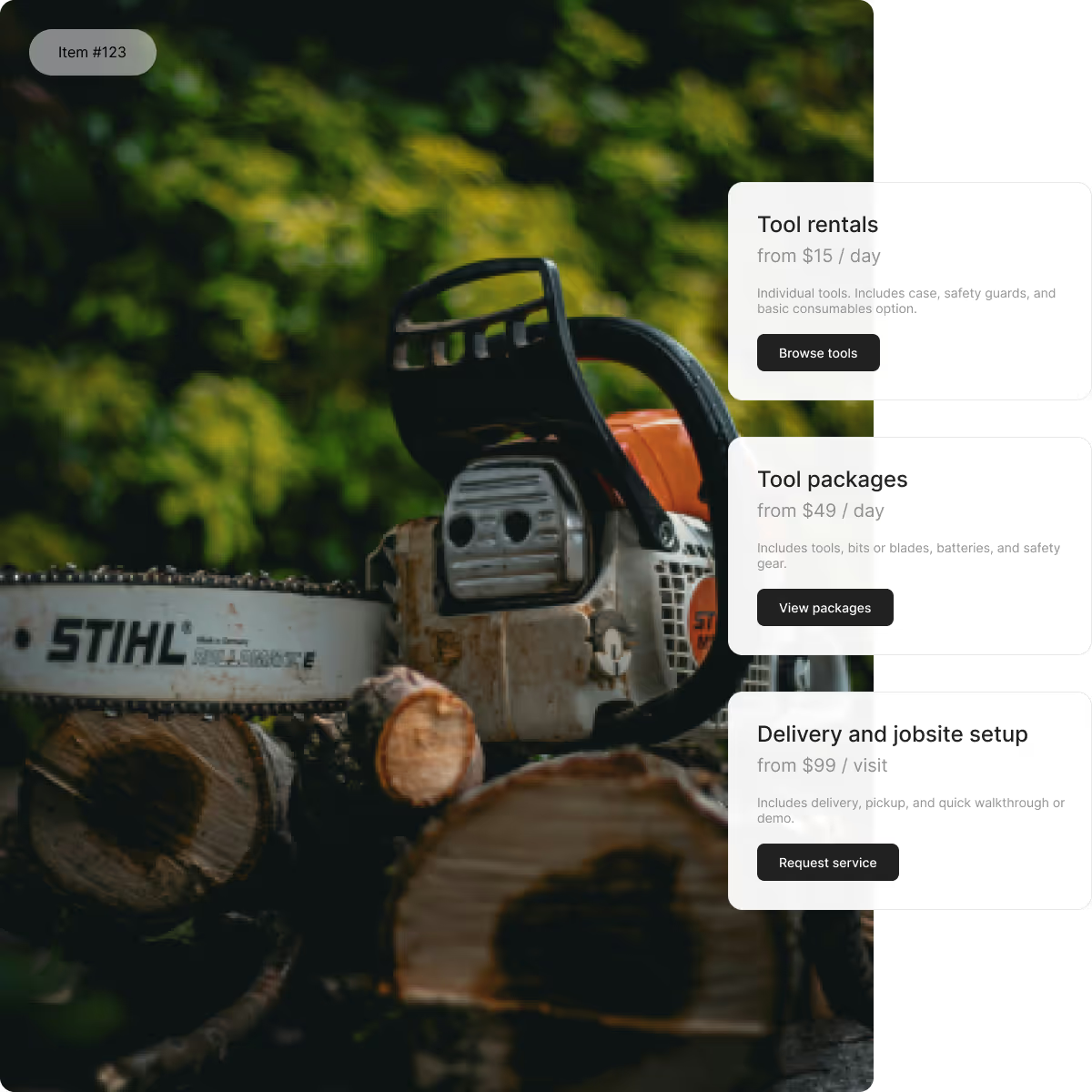
Speed up every step of the fulfillment process with barcode scanner powered flows for picking and handing over the equipment.

Our algorithm automatically identifies the most suitable units for every order based on your rules, maximizing utilization.
Collect a deposit upfront and capture the balance later. Configure flexible payment structures to handle specific B2B or trade terms.
Every order file includes a section for documents. Signed contracts and safety certifications are automatically linked to the transaction.
Toggle between daily, weekly, or monthly views to track upcoming pickups and returns, ensuring your team is ready.
Handle returns with ease with predefined workflows. Ensure every tool is checked, cleaned, and tested before it is rented again.
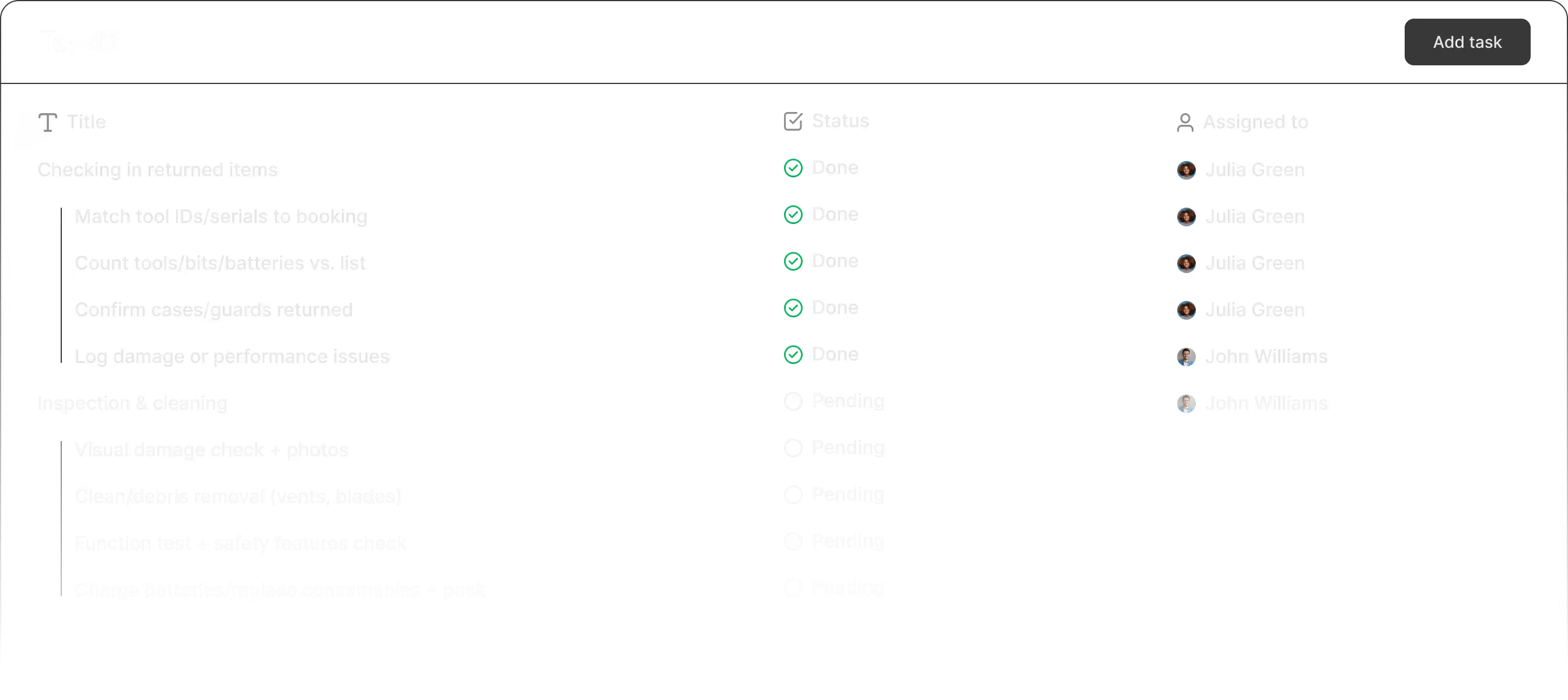
Simply scan equipment when it comes back to mark items as returned and ready for the technical inspection.
Route items to restocking workflows that ensure every tool is safety tested and well maintained for the next project.
Reserve time between orders so your team has time to perform every testing task before the item can be rented again.
Drive efficiency and remove questions by unifying how your team handles equipment inspections and maintenance steps.
“If we didn’t have such good tools, it would be much more difficult for me to run the business on my own.”
Whether you have a quick question or need deep advice, our team and resources ensure you always have a clear path forward.
You need a website and online booking software to start getting online reservations for tools and construction equipment. With TWICE, your equipment rental business gets a ready-made e-commerce website with a built-in online booking system.First, add the products and services you want to rent and sell to TWICE and determine the quantities in TWICE's inventory management system. That way, your availabilities are always up to date, and you don't get overbooked. Next, set up your payment options so your customers can book and pay their rentals in advance.Once everything is set up, you can embed TWICEto your existing website or use TWICE as a standalone website.
The tool rental industry has a large number of specialized equipment rental companies. Companies serving mostly professional contractors typically rent more lifters, scaffolding, generators, and other heavy equipment. On the other hand, companies serving private individuals offer a range of special tools such as hammer drills, cement mixers, diamond grinders, industrial vacuums, and other tools needed for smaller DIY projects. When defining your product range, it is essential to know your customer base and needs.
Starting a tool rental business requires a lot of planning, preparation, and setting up processes. First, you need to make a business plan. Your business plan includes a description of your business, market and competitor analysis, financial plan, and marketing plan. It is also essential to consider how you will organize your processes, such as inventory management, order processing, and equipment maintenance on your site.
Generally, tool and equipment rentals can be very profitable and enjoy high profit margins. Still, just like with any company, profitability comes down to your business's income and expenditure structure.Rental companies serving professional contractors typically have longer contracts, and single orders are bigger. The downside is that the market is more challenging to enter because the equipment is more expensive, and the competition is fiercer. Companies focusing more on private individuals can get started easier because the tools are cheaper to buy. However, DIY projects tend to be concentrated in the summer months, making the business somewhat more seasonal.To better understand your financial estimates, we recommend looking at ourguide to financial planning and budgeting →
Book a tailored demo with our team.