Software for resellers and game stores to sell used puzzles at scale

Process supply faster
Streamline intake for donations, trade-ins, consignment, liquidation, and buybacks in one unified flow.
Grade items accurately
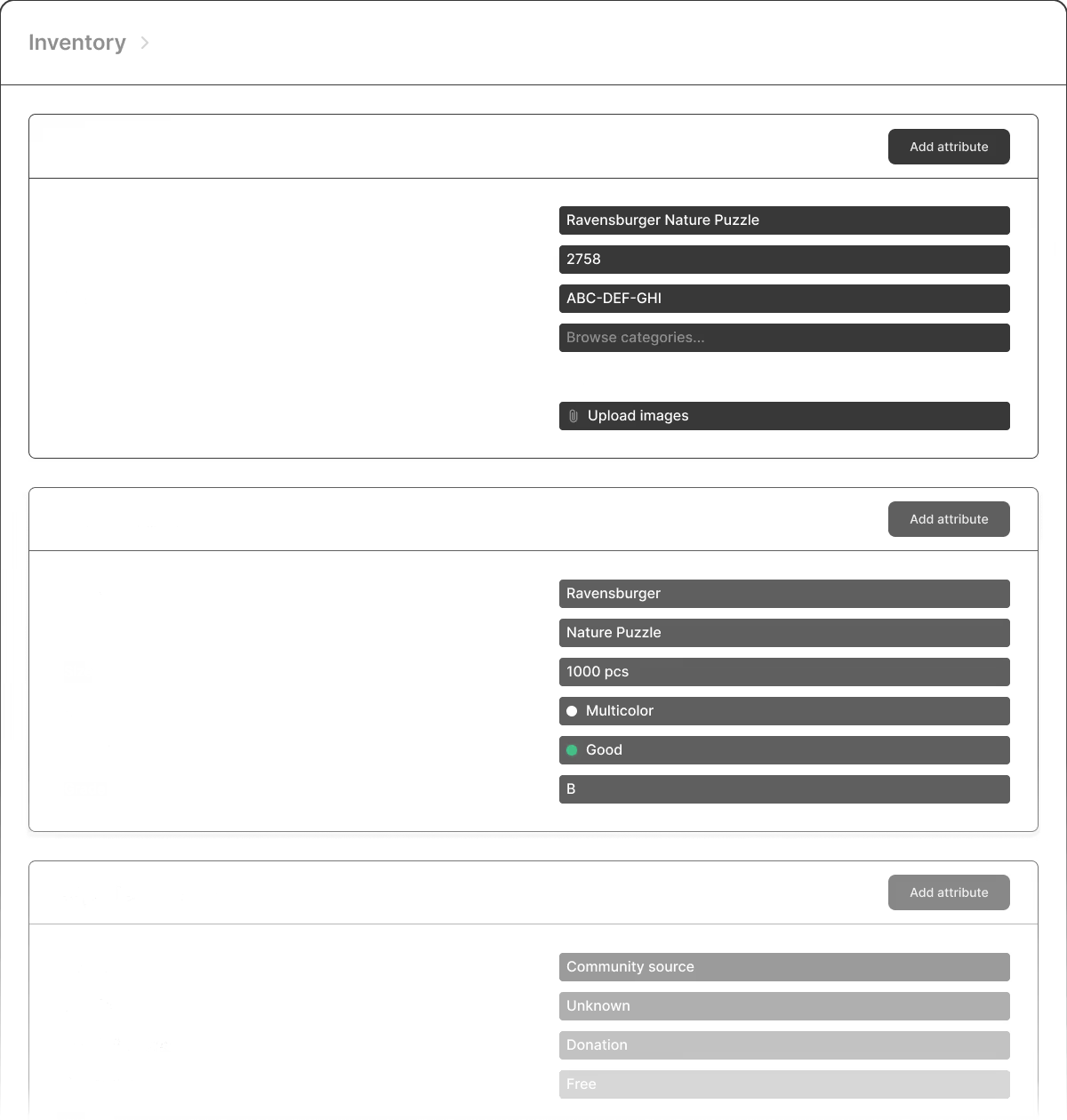
Capture piece counts, condition, age range, and theme details consistently with dynamic attributes and rich media.
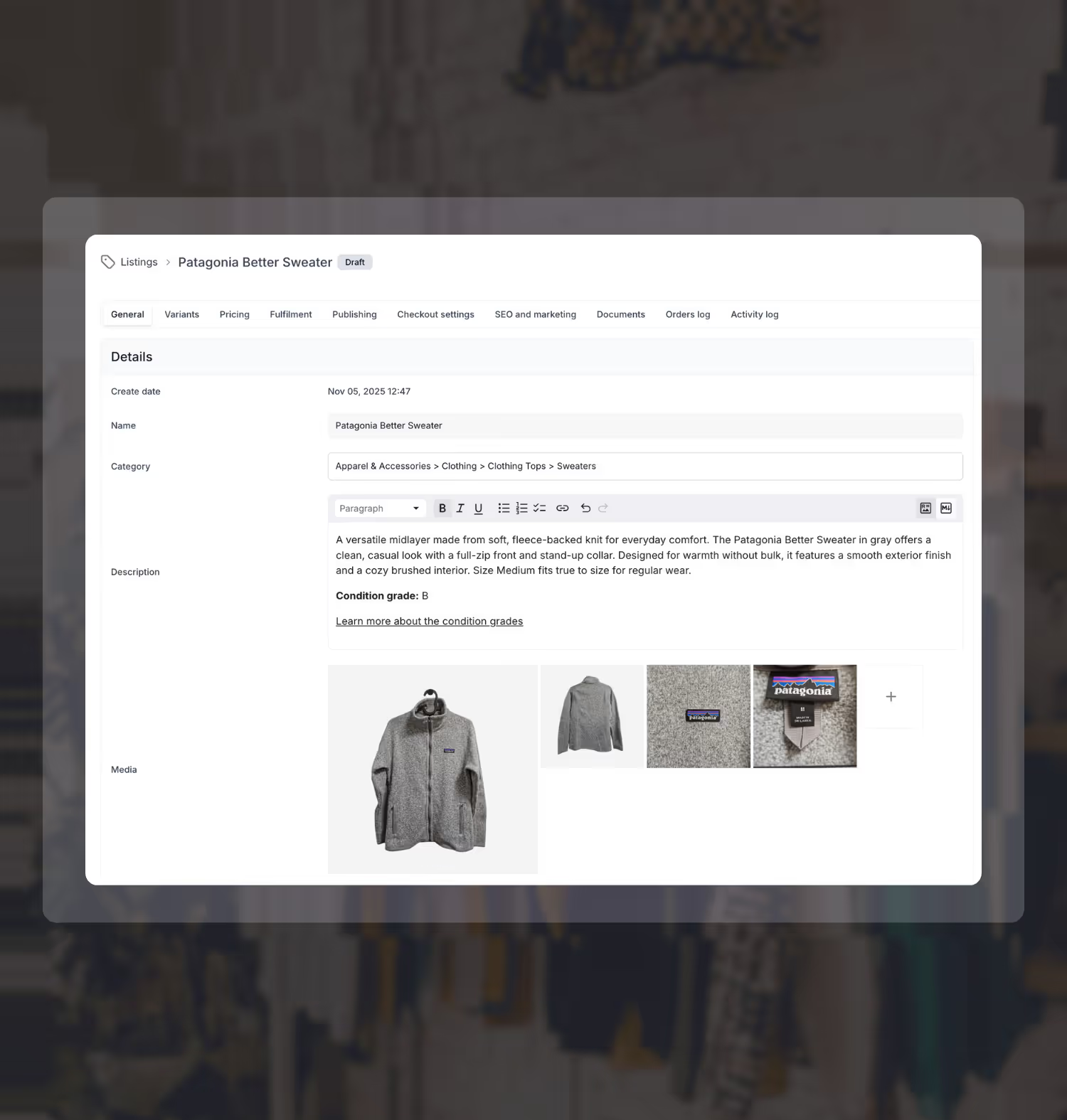
List items at scale
Turn structured intake data into complete, trustworthy product pages — no spreadsheets, no manual relisting.
Sell everywhere
Cross-list verified puzzles to your store, marketplaces, and retail locations with real-time sync and integrated payments.
From sourcing to selling in one continuous flow.
Register resale inventory with structure
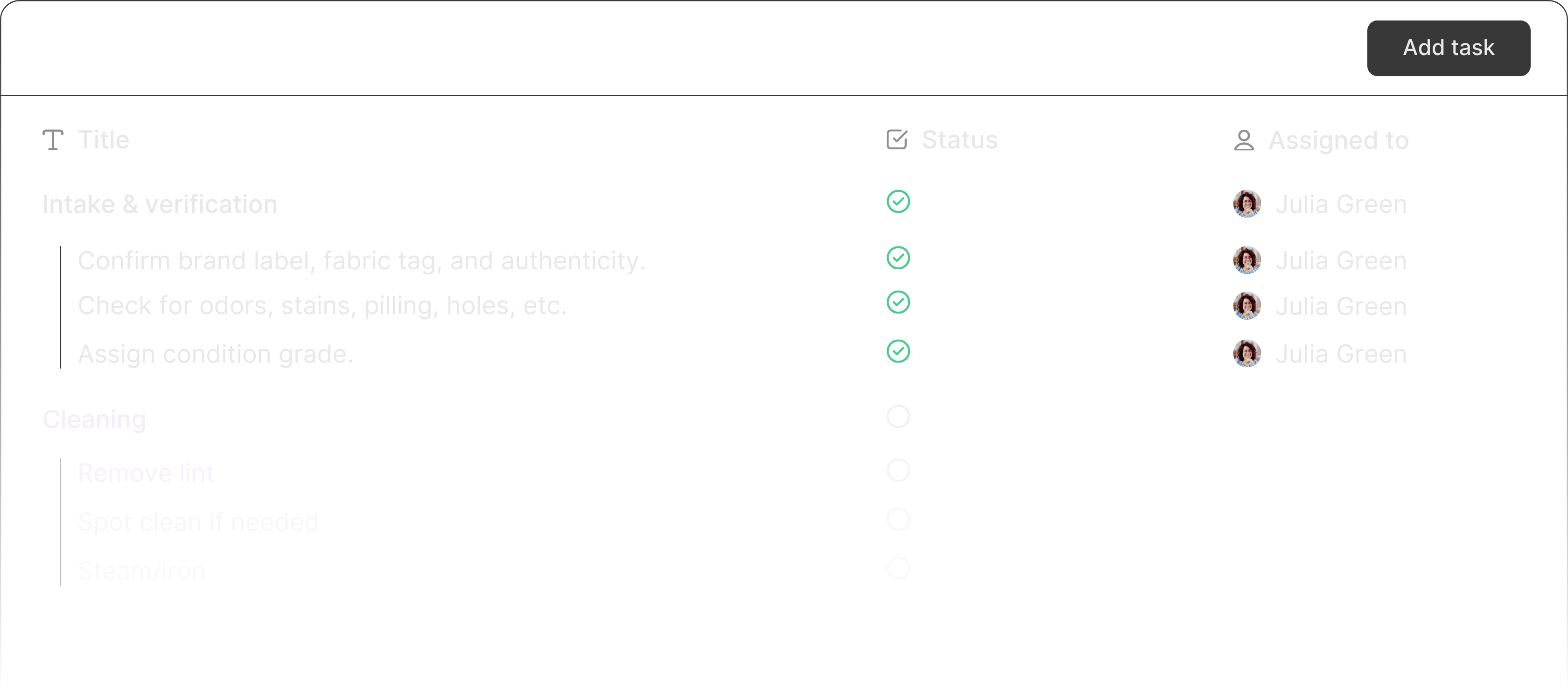
Inspect and grade consistently
Define inspection criteria for used puzzles, document condition and required records per unit, and assign review steps across your team for consistent grading.
List fast
Sell across every channel
Sell verified used puzzles through your own site, physical locations, and marketplaces — without losing track of single-quantity items. TWICE keeps inventory and orders synced in real time, so you can confidently sell across channels with one source of truth.

Selling old puzzles is good business. Doing it with TWICE is even better.
From solo puzzle resellers to national toy and game store chains, TWICE provides the structure and automation needed to scale used puzzle programs without chaos.
Independent resellers
Replace spreadsheets and scattered tools with one easy-to-use system that helps you organize used puzzle inventory and cross-list items quickly across the resale channels that matter.
Local game stores
Streamline intake, pricing, and listing work while expanding from a physical store to online channels, and stand out by offering a more transparent and reliable buying experience.
Brands and retailers
Launch and own a puzzle resale program that strengthens customer relationships, supports sustainability goals, and creates a scalable new revenue stream from pre-owned inventory.
Frequently asked questions
How does TWICE help manage one-of-a-kind and low-quantity puzzle inventory?
Used puzzle inventory changes daily, and most items are single-quantity. TWICE uses single-item tracking, so each puzzle carries its own data: brand, piece count, condition grade, verification status, intake source, cost, and sales history. You always know what’s available, where it is, and which items are ready to list — without relying on manual spreadsheets.
Can TWICE support trade-ins, donations, consignment, and buyback programs for puzzles?
Yes. TWICE is designed to handle multiple intake models in one system. You can manage store trade-ins and loyalty credits, track consignor agreements and payouts, log donations, or run outright buyback programs. Each puzzle keeps its source, cost basis, and payout rules attached, making secondhand sourcing structured and auditable.
How does TWICE help verify puzzle completeness and condition?
TWICE lets you build standardized verification flows for different puzzle types. Your team can record whether a puzzle has been fully counted or assembled, log missing pieces or replacement notes, capture packaging wear, and attach photos of contents. These checks become part of the item record and can automatically influence condition grade, pricing, and listing descriptions.
Can TWICE connect my in-store used puzzle section with my online channels?
Yes. TWICE centralizes inventory across your physical locations, warehouse, pop-ups, and online store. When a used puzzle sells in-store, stock updates instantly everywhere else, preventing overselling. The same applies to online orders, so you can confidently cross-list unique items across channels without double-selling.
How does TWICE streamline pricing for used puzzles?
With TWICE, you can create pricing rules that consider brand, piece count, theme, condition grade, and verification status. Base prices can be set automatically, with adjustments for wear, missing pieces, or high-demand themes. Your team still has room for expert overrides, but the system removes repetitive pricing work and keeps valuations consistent across staff and locations.