Software for resellers and jewelry stores to sell old jewelry at scale
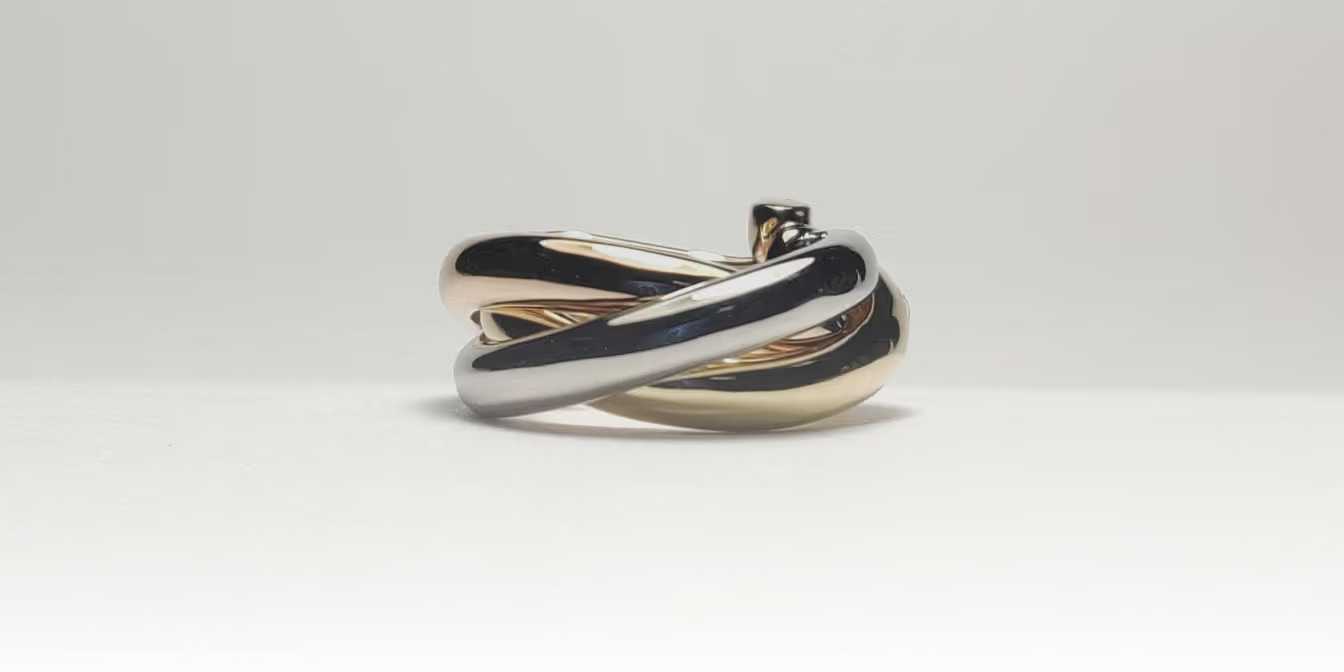
Process supply faster
Streamline intake for trade-ins, estate buys, consignment, and buybacks with fast, standardized flows.
Grade items accurately
Capture metal, stones, weight, certifications, and condition consistently with item-level media and attributes.
List items at scale
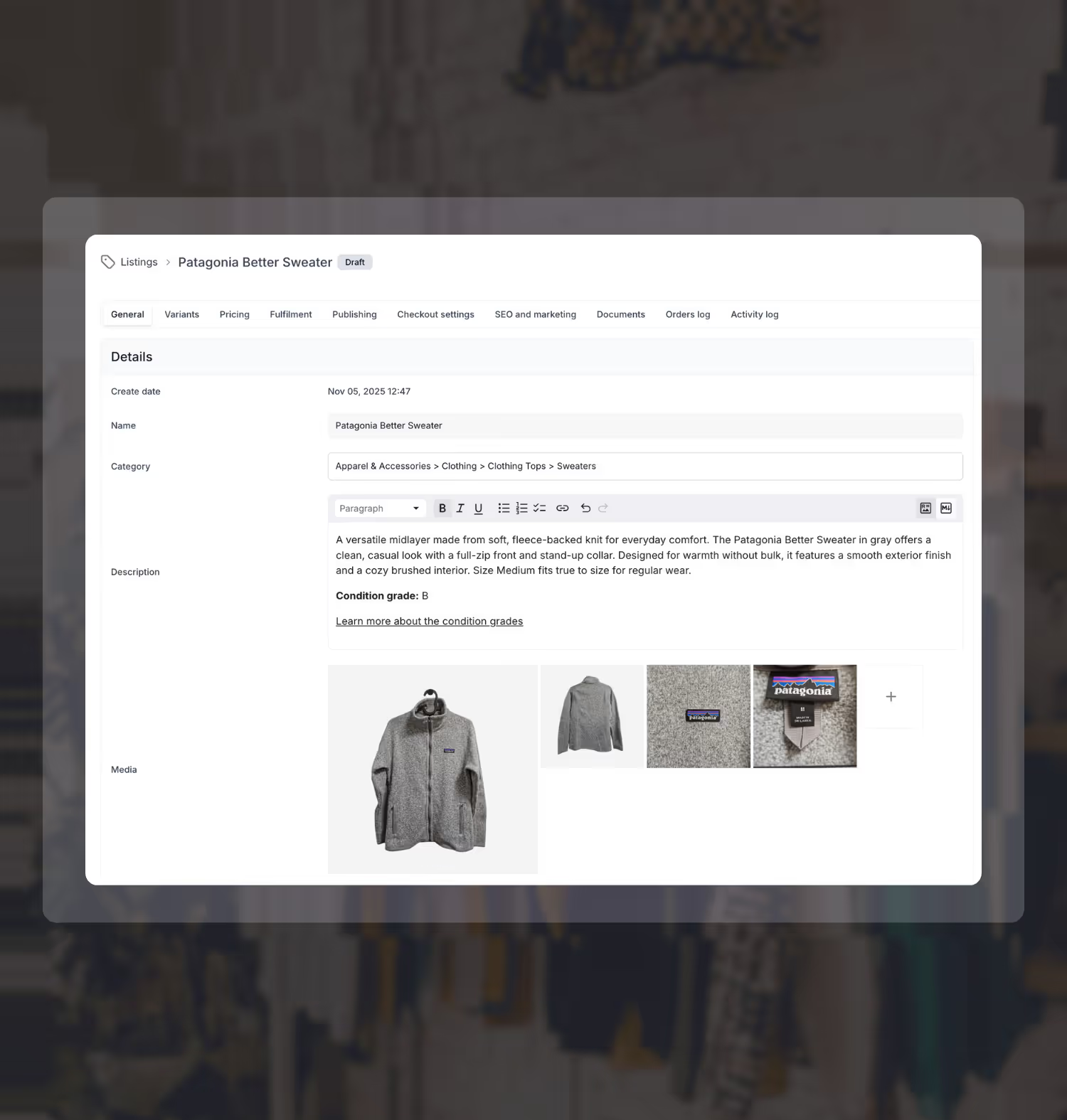
Turn expert appraisals and grading into clear, trustworthy product pages in a fraction of the time.
Sell everywhere
Cross-list unique pieces to your boutique, online store, and marketplaces with real-time sync and unified payouts.
From sourcing to selling in one continuous flow.
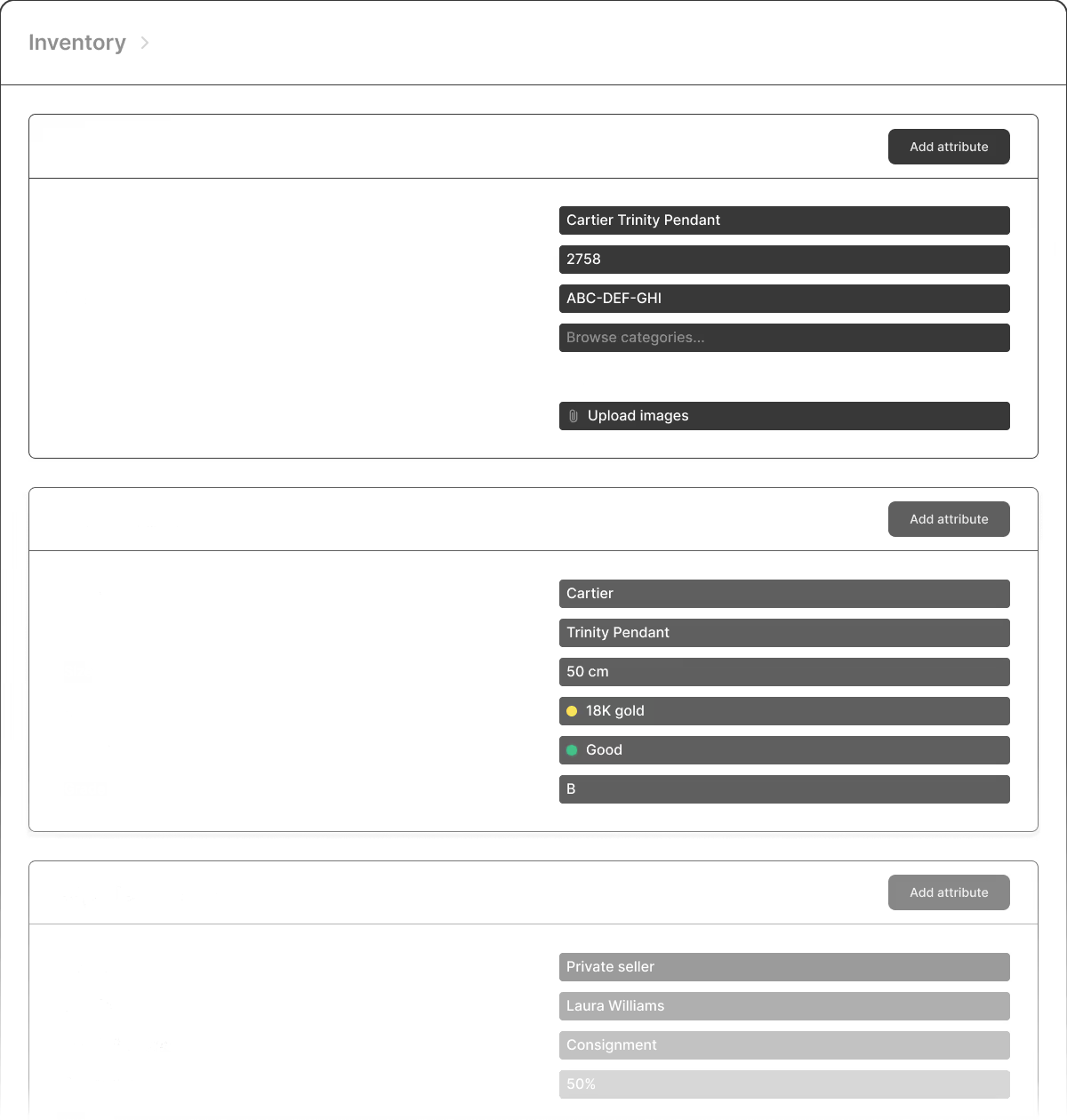
Register resale inventory with structure
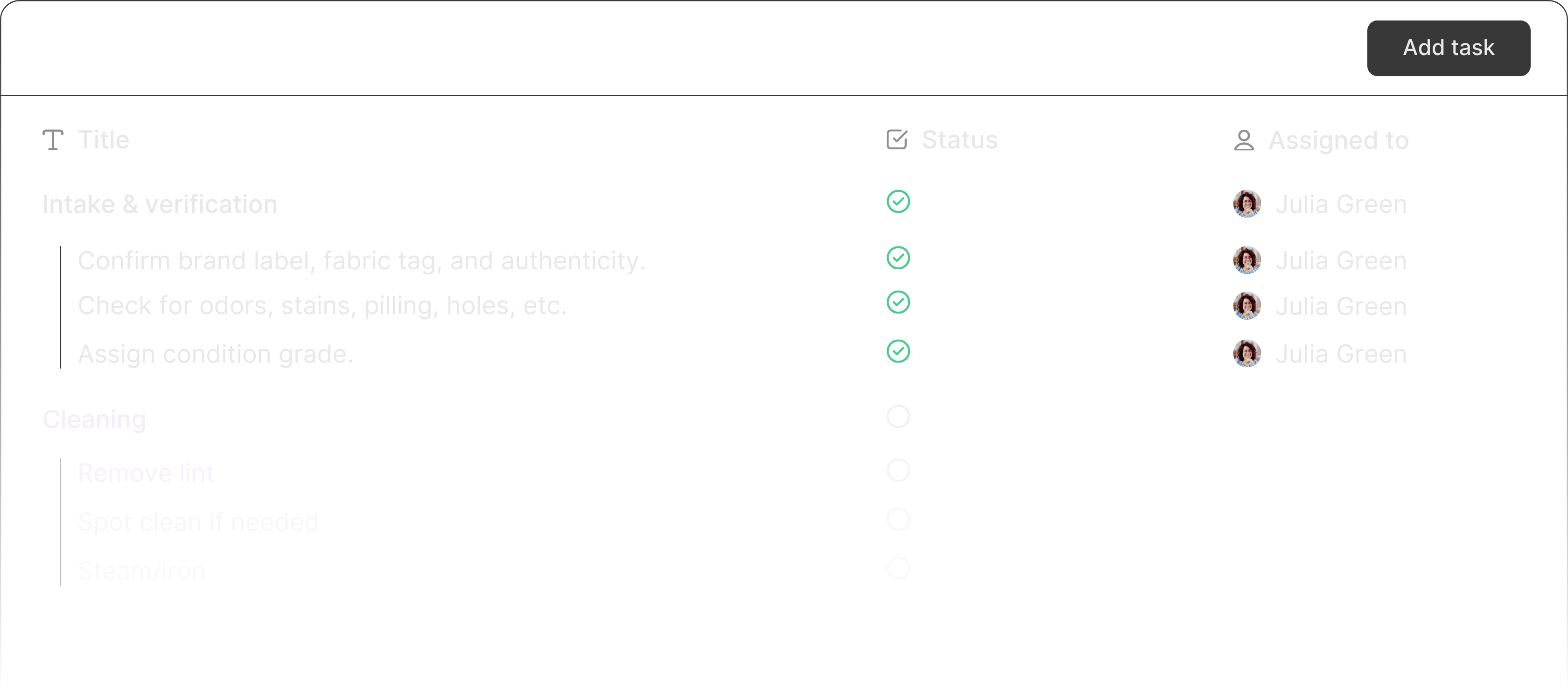
Inspect and grade consistently
Define inspection criteria for used jewelry, document condition and required records per unit, and assign review steps across your team for consistent grading.
List fast
Sell across every channel
From your showroom to your webstore to specialist marketplaces, TWICE keeps every one-of-a-kind piece accurate and available in real time. Cross-list in a few clicks, reduce manual coordination, and rely on a single backend that understands the complexity of high-value jewelry orders.
Selling pre-owned jewelry is good business. Doing it with TWICE is even better.
From independent jewelers to multi-location chains and luxury brands, TWICE powers any team reselling pre-owned jewelry, watches, and accessories with tools tuned to high-value, one-of-a-kind inventory.
Independent jewelers
Replace spreadsheets and scattered tools with one easy-to-use system that helps you organize jewelry inventory and cross-list items quickly across the resale channels that matter.
Pawn shops & estate specialists
Streamline intake, pricing, and listing work while expanding from a physical store to online channels, and stand out by offering a more transparent and reliable buying experience.
Brands and retailers
Launch and own a certified jewelry resale or trade-in program that extends asset lifecycles, strengthens customer relationships, and creates new revenue from pre-owned inventory.
Frequently asked questions
How does TWICE handle unique, high-value jewelry items?
TWICE is built for one-of-a-kind inventory. Each piece — from a simple gold band to a certified diamond or luxury watch — gets its own record with condition, specs, photos, certificates, ownership history, purchase price, and sale data. You always know where it is, what it’s worth, and whether it’s ready to list or already reserved, without relying on manual notes or spreadsheets.
Can TWICE support both consignment and buyback/trade-in models for jewelry?
Yes. TWICE is designed for multiple intake models. You can track consignor agreements, split rates, settlement cycles, and unsold returns alongside buyback and trade-in flows where you own the inventory outright. All models run in the same system, so sourcing pre-owned jewelry stays structured, auditable, and easy to scale.
How does TWICE help with authentication and certifications?
TWICE doesn’t replace your gemologists or watchmakers — it gives them structure. The platform lets your team record metal purity, gemstone details, serial numbers, hallmarks, and grading notes using standardized fields. You can upload lab reports (e.g., GIA certificates), appraisals, and service records directly to each item, then surface that information clearly on the product page to build buyer trust.
Can TWICE connect our in-store jewelry operations with online resale channels?
Yes. TWICE centralizes inventory across showrooms, backrooms, warehouses, pop-ups, and your online store. Every sale updates stock in real time, so a one-of-one ring or watch can’t be sold twice. In-store POS flows and online checkout stay synced through one backend, giving you a single source of truth for availability and pricing.
How does TWICE support pricing for used jewelry with changing market values?
With TWICE, you can combine expert appraisals with pricing rules. Capture your team’s valuation inputs at intake, then apply automated rules based on brand, metal type, gemstone category, condition, or age of listing. You can also run bulk price updates when metal spot prices or demand shifts, ensuring your catalog remains competitive while protecting margins.