Software for resellers and music stores to sell used flutes at scale
Process supply faster
Intake trade-ins, consignments, buybacks, and school returns with fast, unified workflows tailored to instruments.
Grade items accurately
Capture brand, model, key system, pads, mechanics, and cosmetic condition consistently with item-level media.
List items at scale
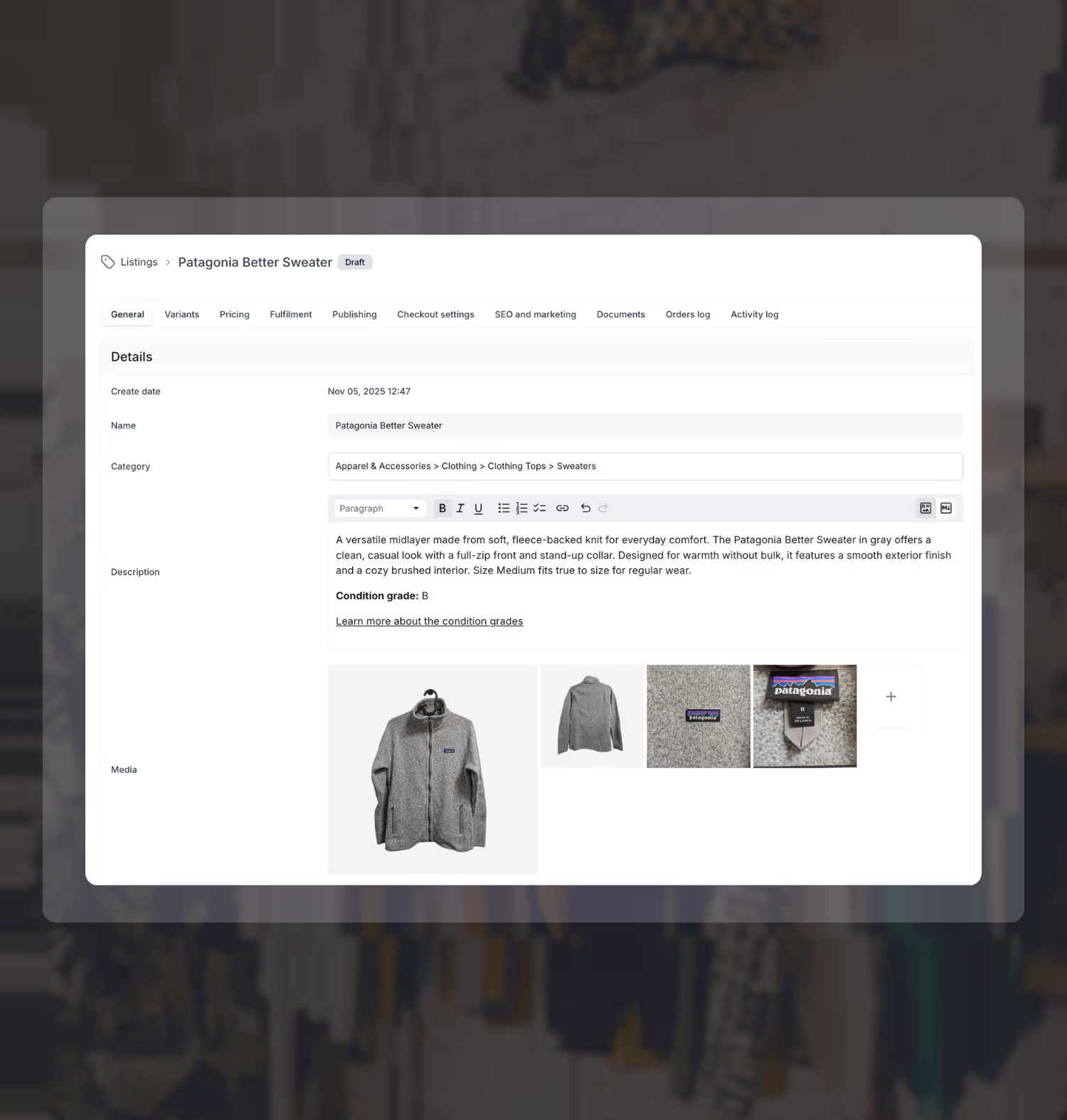
Turn structured intake and repair data into clear, trustworthy product pages — no bottlenecks, no messy spreadsheets.
Sell everywhere
Cross-list each flute to your shop, education partners, and marketplaces with real-time sync and integrated payments.
From sourcing to selling in one continuous flow.
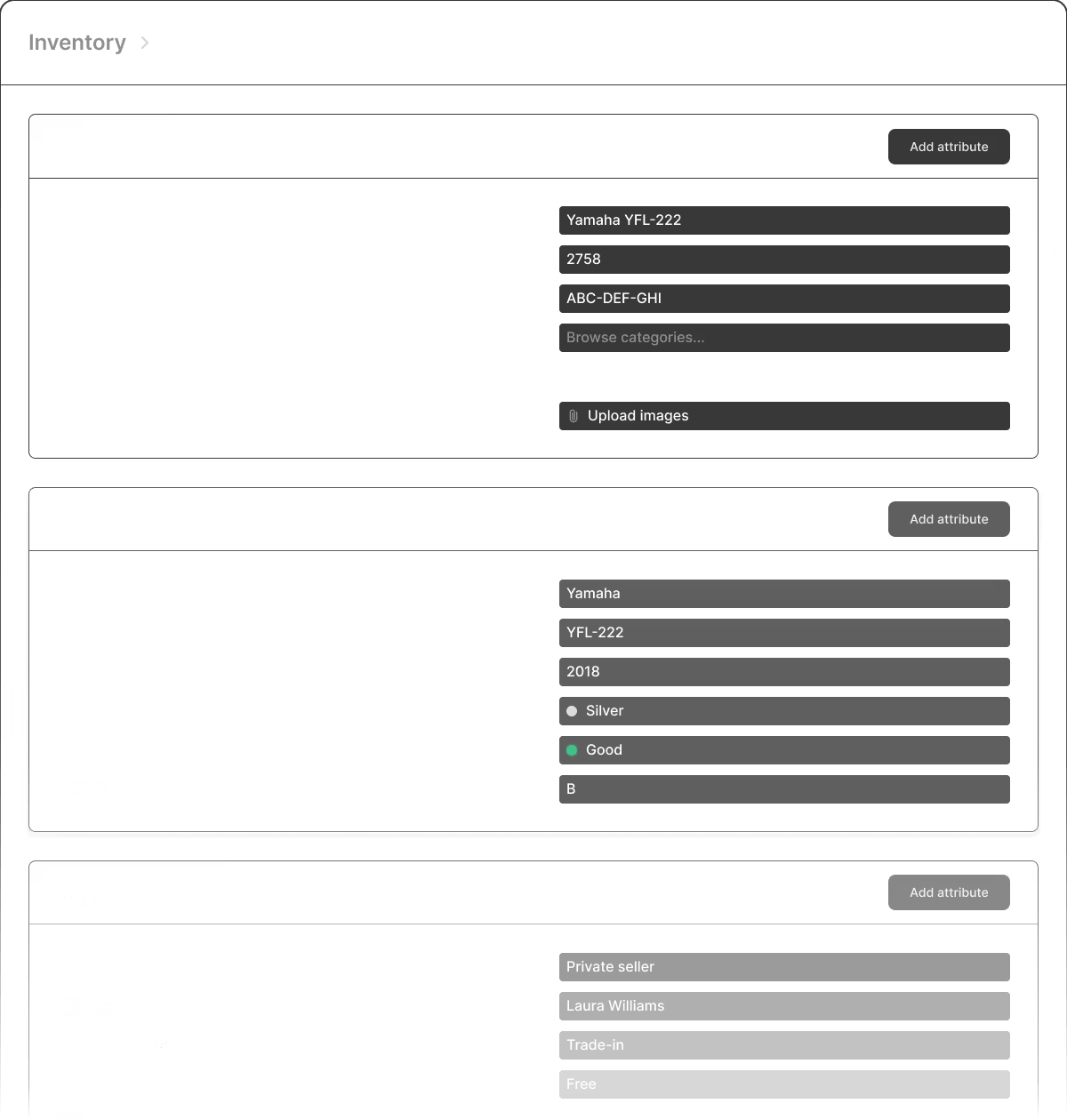
Register resale inventory with structure
Inspect and grade consistently
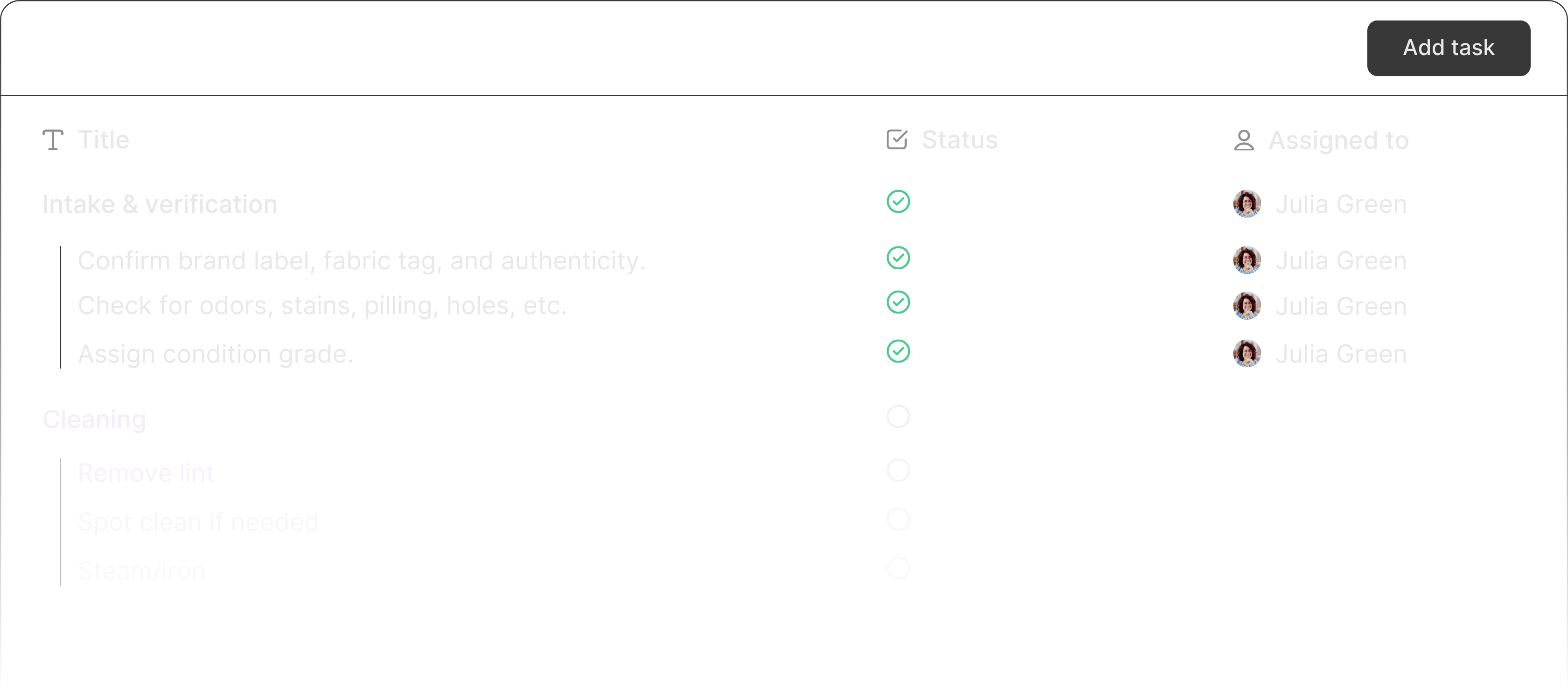
Define inspection criteria for used flutes, document condition and required records per unit, and assign review steps across your team for consistent grading.
List fast
Sell across every channel
Whether you sell from a brick-and-mortar music store, workshop, school partnerships, or online channels, TWICE keeps every used flute synced in real time. Cross-list in a few clicks, avoid double-selling unique pieces, and manage all orders from one backend.
Selling used flutes is good business. Doing it with TWICE is even better.
From independent repair shops to multi-location music retailers and brands, TWICE supports any team handling secondhand flutes at volume with tools designed for used instruments.
Independent resellers
Replace spreadsheets and scattered tools with one easy-to-use system that helps you organize used flute inventory and cross-list items quickly across the music resale channels that matter.
Local music stores
Streamline intake, pricing, and listing work while expanding from a physical store to online channels, and stand out by offering a more transparent and reliable buying experience.
Brands and retailers
Launch and own a certified flute resale or trade-in program that extends asset lifecycles, strengthens customer relationships, and creates new revenue from pre-owned inventory.
Frequently asked questions
How does TWICE handle unique, one-of-a-kind flutes and custom builds?
Every instrument in TWICE is tracked as its own item with a unique identity. You can capture custom specs like headjoint maker, riser material, keywork options, engraving, and previous modifications — along with condition, intake source, cost, and history. You always know where each flute is, what work has been done, and what it is listed for across all channels.
Can TWICE support both trade-in and consignment programs for flutes?
Yes. TWICE is built to handle multiple intake models side by side. You can track consignor agreements, commission rates, payouts, and settlement cycles, while also running trade-in and buyback programs where flutes are purchased outright or credited toward new instruments. All inventory lives in one system, so your sourcing stays structured and scalable.
How does TWICE connect in-store flute sales with online resale channels?
TWICE centralizes inventory across your showroom, workshop, warehouse, and online store. Each sale or reservation updates stock in real time, preventing double-selling for unique instruments. You can run in-store POS flows and online checkout from the same backend, ensuring accurate availability and pricing everywhere you sell used flutes.
Can TWICE capture repair and refurbishment details for each flute?
Yes. During intake or workshop processing, you can log repair notes, parts used, pad sets, overhauls, and technician comments directly on the item record. This data can stay internal for margin tracking or be selectively surfaced on product pages to justify pricing and increase buyer confidence in used and refurbished flutes.
We already have a website for our music store. Can we still use TWICE?
Absolutely. You can keep your existing website and use TWICE as the engine behind your used and refurbished flute business. Connect via integrations, add product links, or embed store components depending on your setup. TWICE manages inventory, pricing, orders, and lifecycle tracking — your current site remains the face of your brand.