Software for used car dealers

Process supply faster
Streamline trade-ins, buy-backs, fleet offloads, and consignments with structured vehicle intake workflows.
Grade items accurately
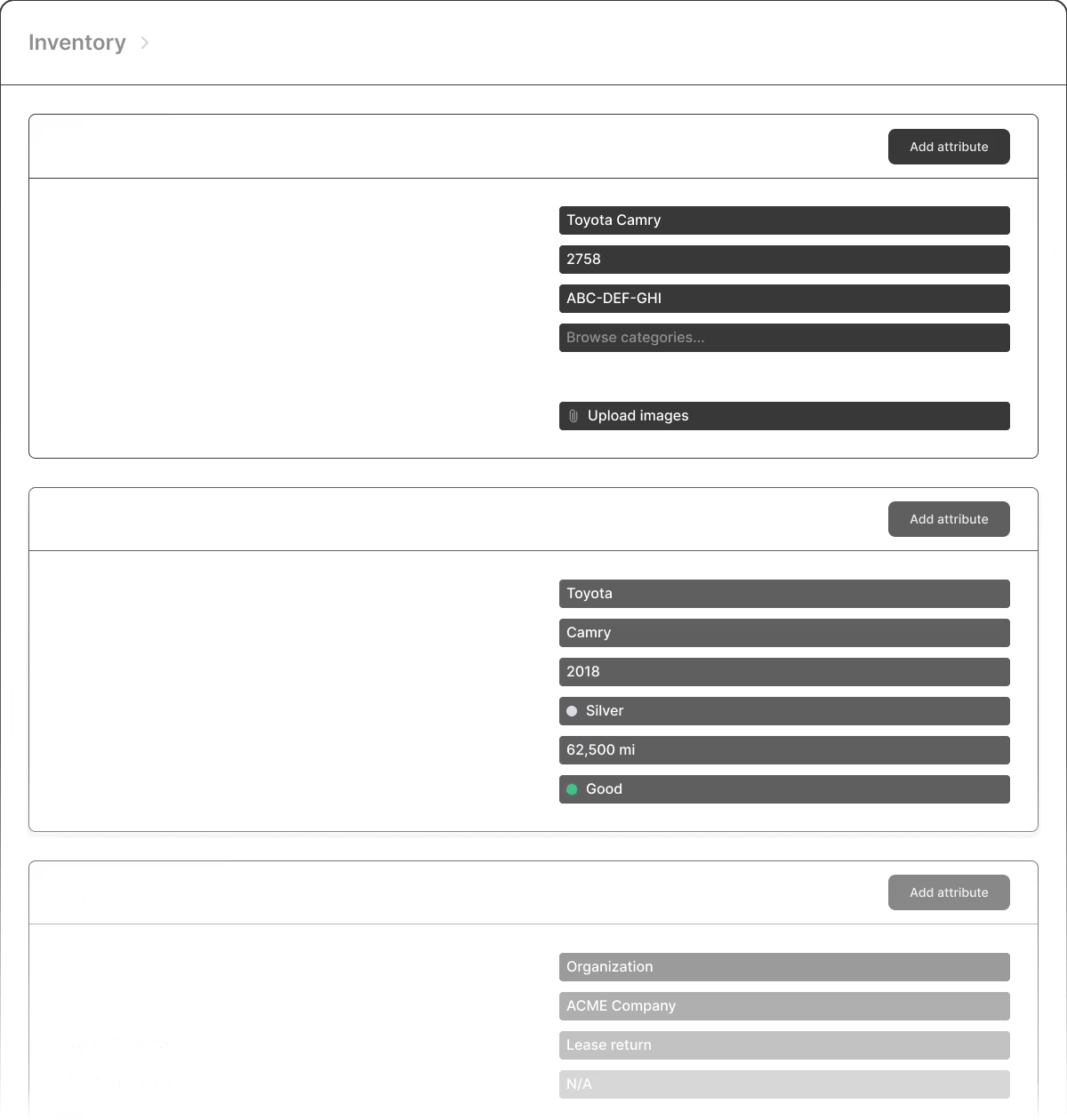
Capture VIN, mileage, service history, and other essential details with consistent, item-level data.
List items at scale
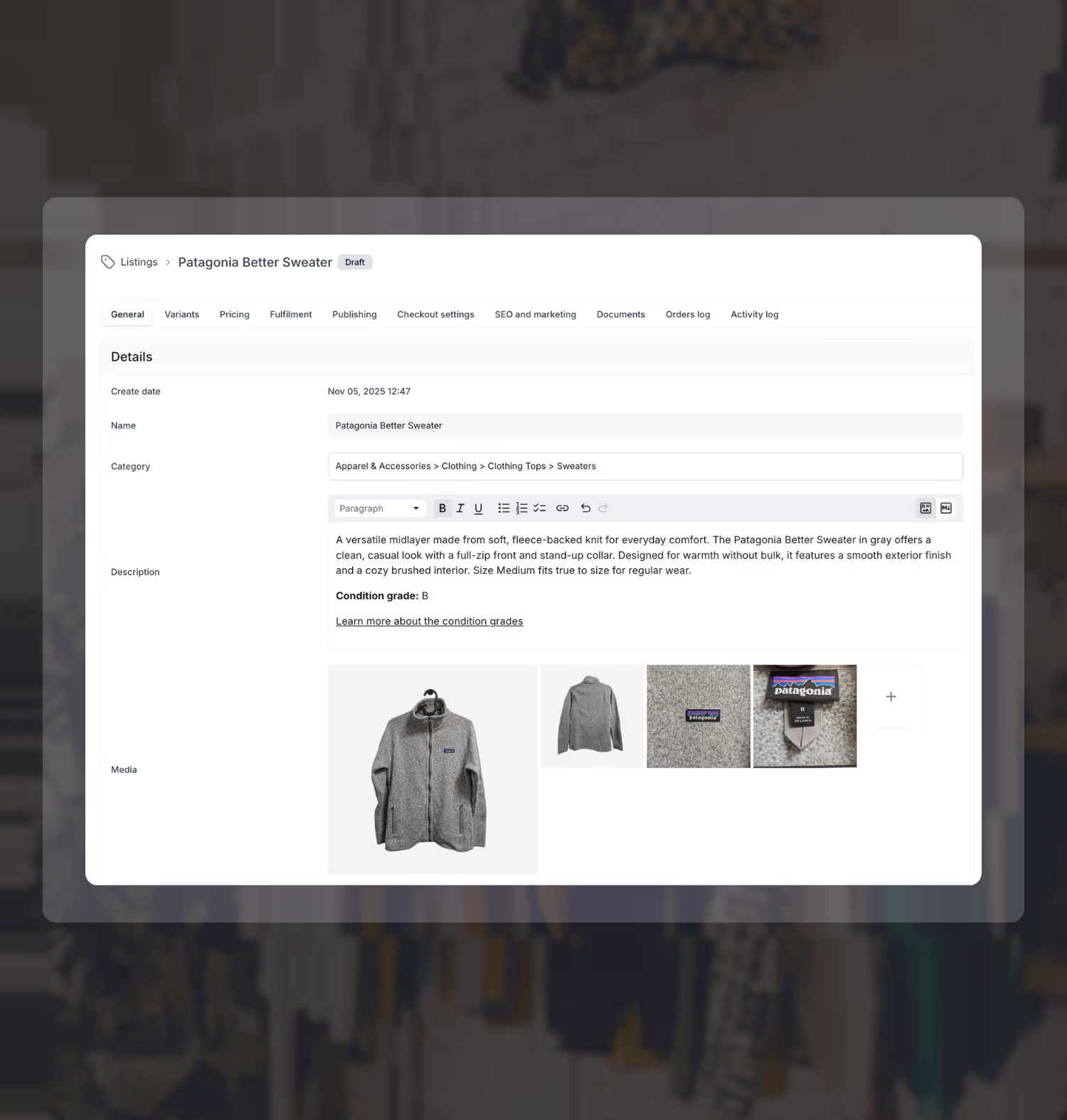
Turn product data into ready-to-sell listings with transparent specs, pricing, and media.
Sell everywhere
Sync inventory and offers across your showroom, website, and marketplaces in real time.
From sourcing to selling in one continuous flow.
Register resale inventory with structure
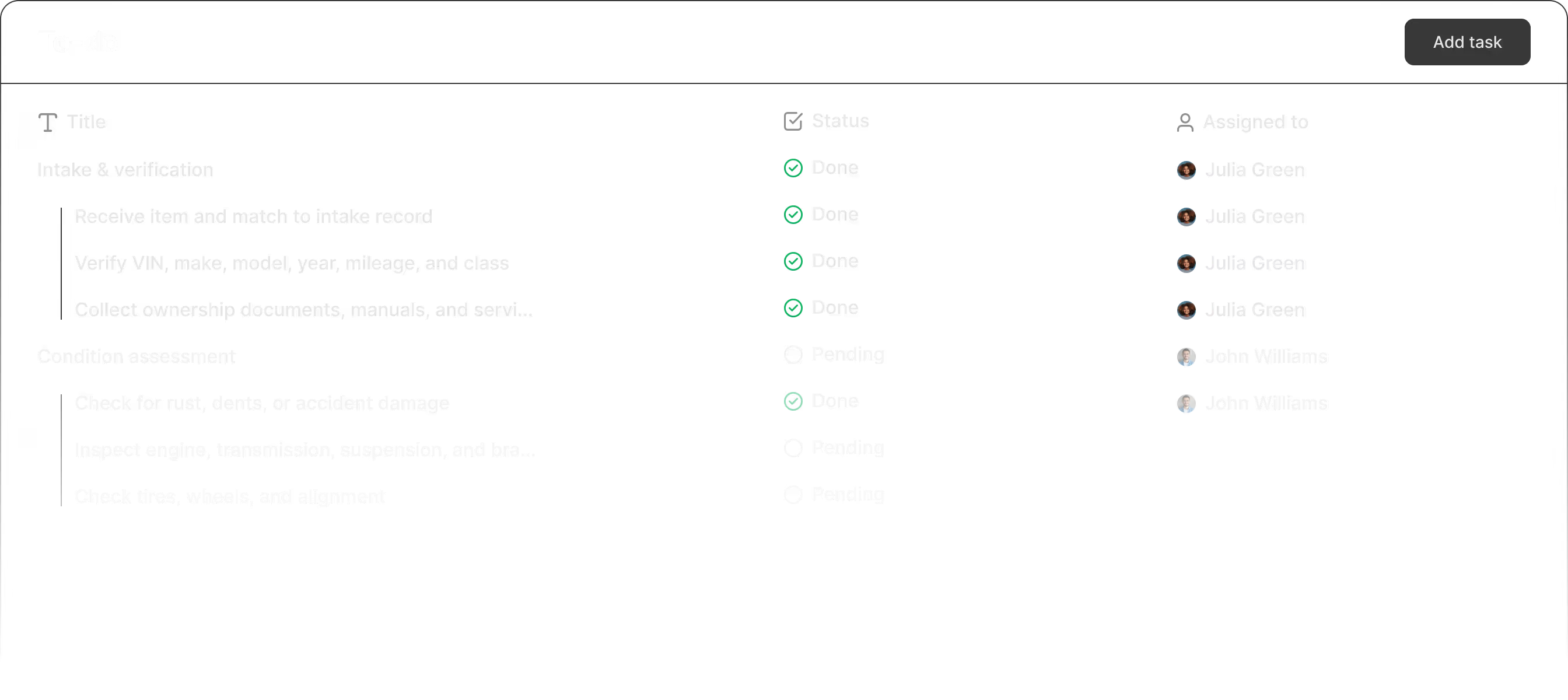
Inspect and grade consistently
Define inspection criteria for used vehicles, document condition and required records per vehicle, and assign review steps across your team for consistent grading.
List fast
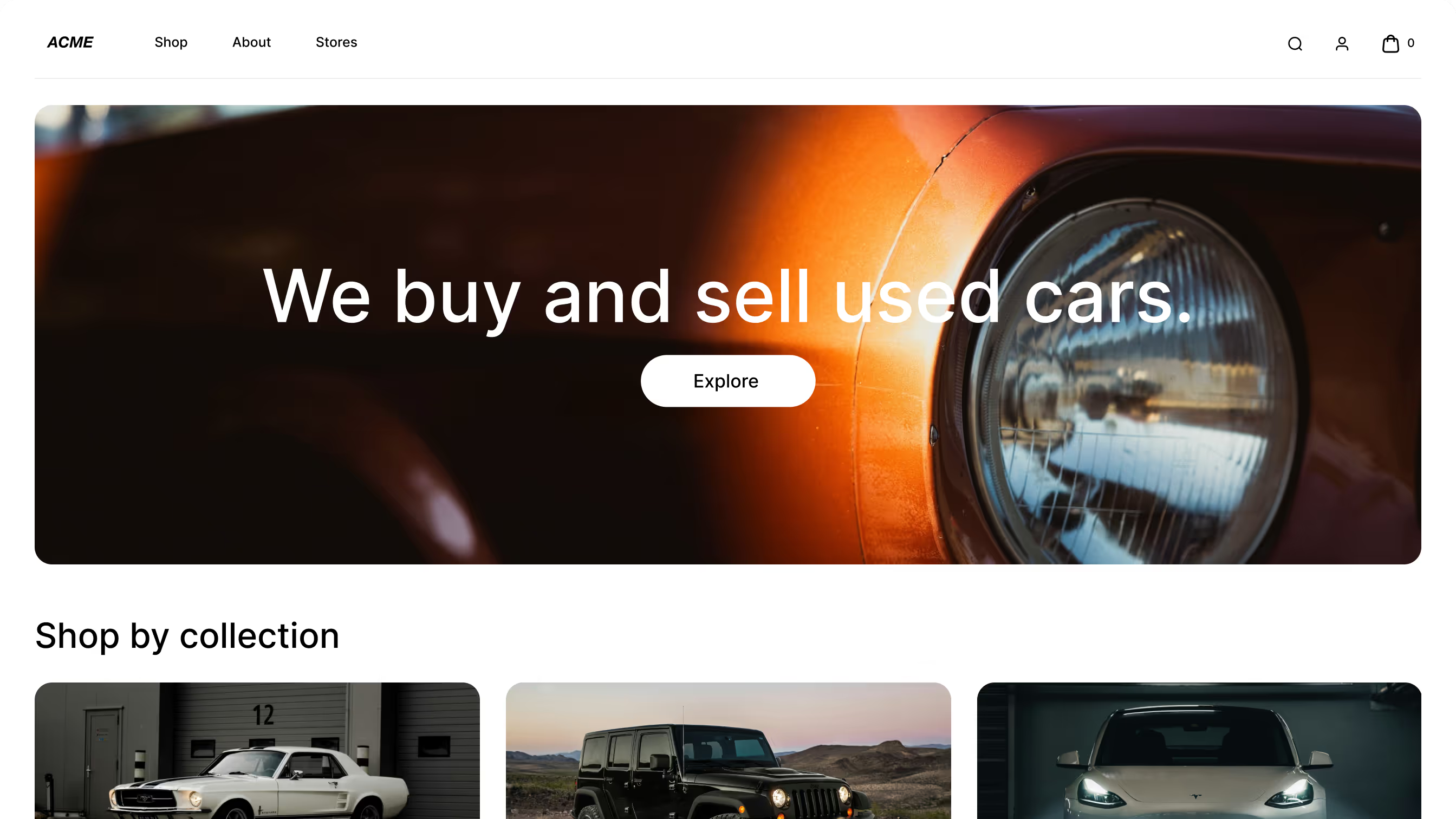
Sell across every channel
Increase reach, visibility, and sales by listing each vehicle across physical locations, online stores, marketplaces, and partner channels from one system built for automotive recommerce.
Selling used cars is good business. Doing it with TWICE is even better.
From independent used car dealers to OEM-backed trade-in programs, TWICE powers used car resale at scale with tools designed for complex resale operations.
Independent dealers
Replace spreadsheets and disconnected tools with one system to organize vehicle inventory and publish listings quickly across the sales channels that matter, without duplicated work or missed details.
Used vehicle dealerships
Streamline intake, pricing, and listing work while expanding from a physical showroom to online channels, and stand out by offering a more professional and consistent buying experience.
Rental companies
Move vehicles from rental fleet to resale while keeping condition, service history, and compliance fully documented.
Brands
Launch and own a branded vehicle recommerce program that strengthens customer relationships, protects brand value, and creates new revenue from trade-ins and pre-owned vehicles.
Frequently asked questions
How does TWICE handle unique, one-by-one vehicles like used cars?
Every car in TWICE is tracked as an individual item tied to a VIN. Its record includes acquisition source, condition grading, photos and videos, documents, recon costs, pricing rules, and sales history. That means you always know where a vehicle is in the process, what it’s worth, and which channels it’s listed on — without relying on spreadsheets or disconnected tools.
Can TWICE support trade-ins, buy-backs, auctions, and consignments?
Yes. TWICE is built for multiple intake models. You can structure trade-in flows at the dealership, manage direct buy-back or guaranteed offer programs, track consignor agreements and payouts, and record auction purchases — all within one system. Each intake type carries its own cost and margin logic as it rolls up into a unified inventory view.
How does TWICE connect my showroom, website, and marketplace listings?
TWICE centralizes your used car inventory and pushes it to all your sales channels. When a car is reserved or sold in-store, its status updates in real time online and on marketplaces, helping prevent double-selling. Likewise, online leads and sales flow back into a single dashboard, so your team can work from one source of truth no matter where buyers find your vehicles.
Can TWICE help standardize inspections and pricing across locations?
Yes. You can define standardized inspection checklists and grading schemas that every location uses for intake. TWICE then ties pricing rules to those grades, mileage, and vehicle segments, so appraisals and listings follow the same logic everywhere. Managers can monitor exceptions, adjust rules centrally, and ensure local teams stay within defined parameters.
Does TWICE replace my DMS or website, or sit alongside them?
TWICE is designed to be your recommerce engine. You can use it alongside your existing DMS and website, or as the core platform for your recommerce operations, depending on your setup. Many customers keep their current retail site and dealer systems while TWICE powers inventory, pricing, listings, and workflows in the background through integrations and embeddable components.