Software for secondhand bookstores

Process supply faster
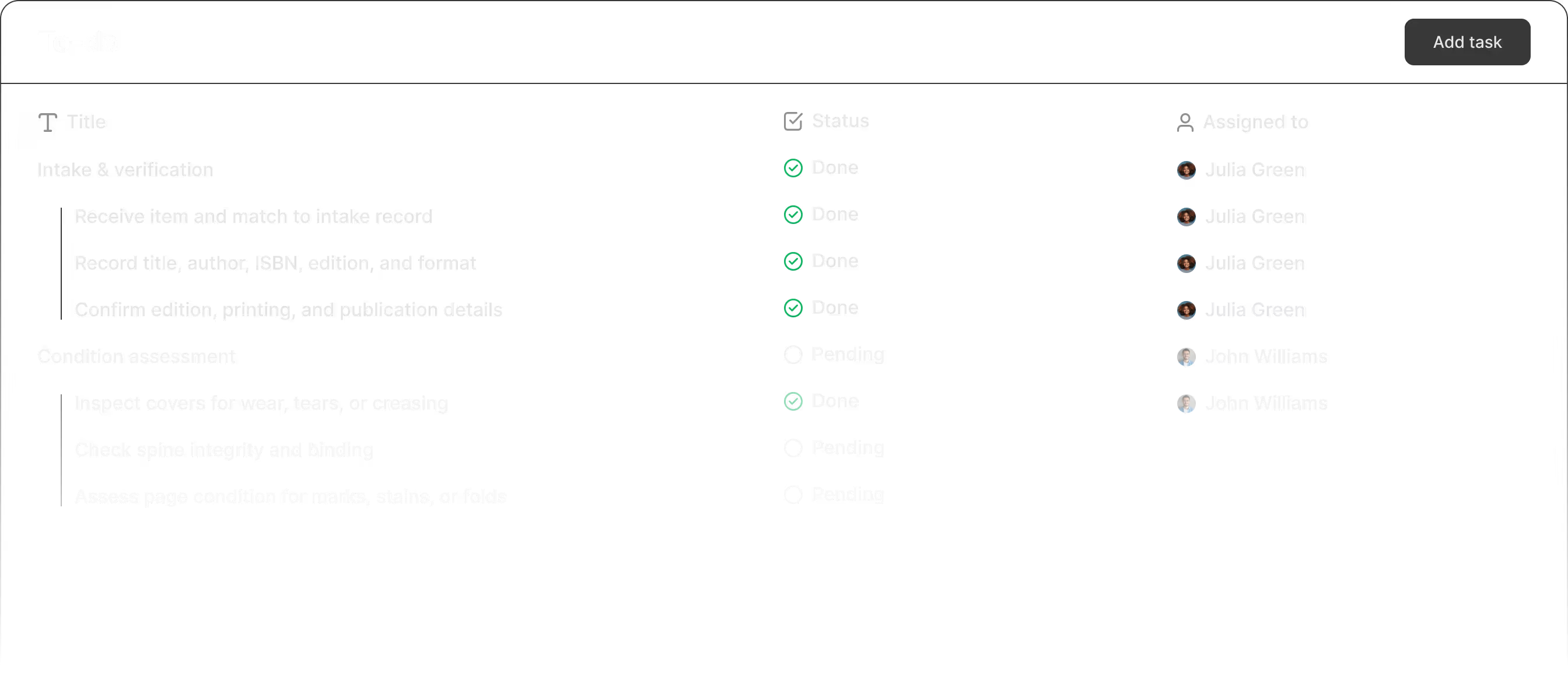
Handle donations, trade-ins, buybacks, library or store deaccessions with standardized intake workflows.
Grade items accurately
Capture ISBN, edition, and other essential details consistently using dynamic attributes and item-level records.
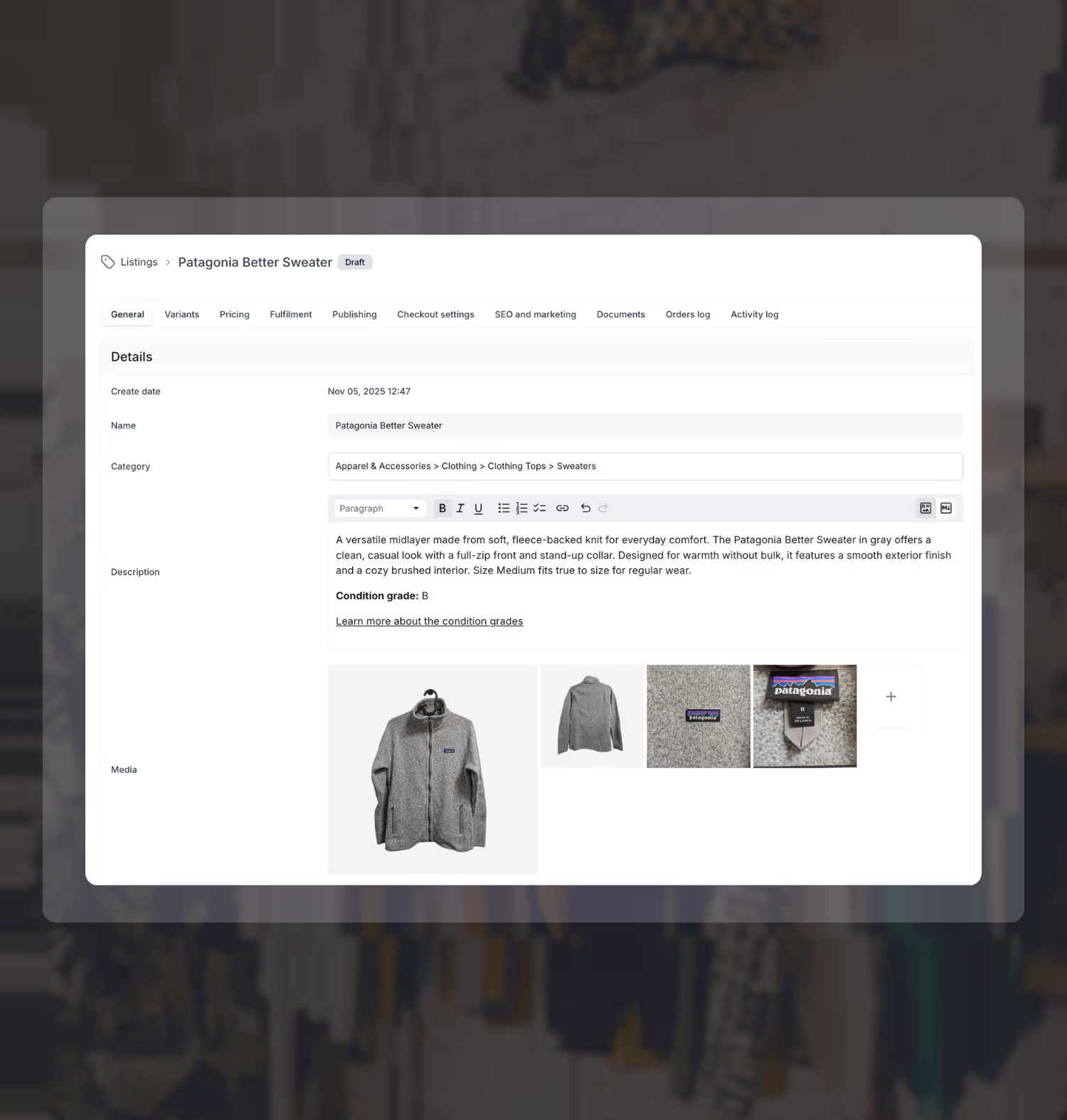
List items at scale
Turn product data into ready-to-sell listings with transparent specs, pricing, and media.
Sell everywhere
Cross-list listings to retail, your online store, and marketplaces with real-time sync and integrated payments.
From sourcing to selling in one continuous flow.
Register resale inventory with structure
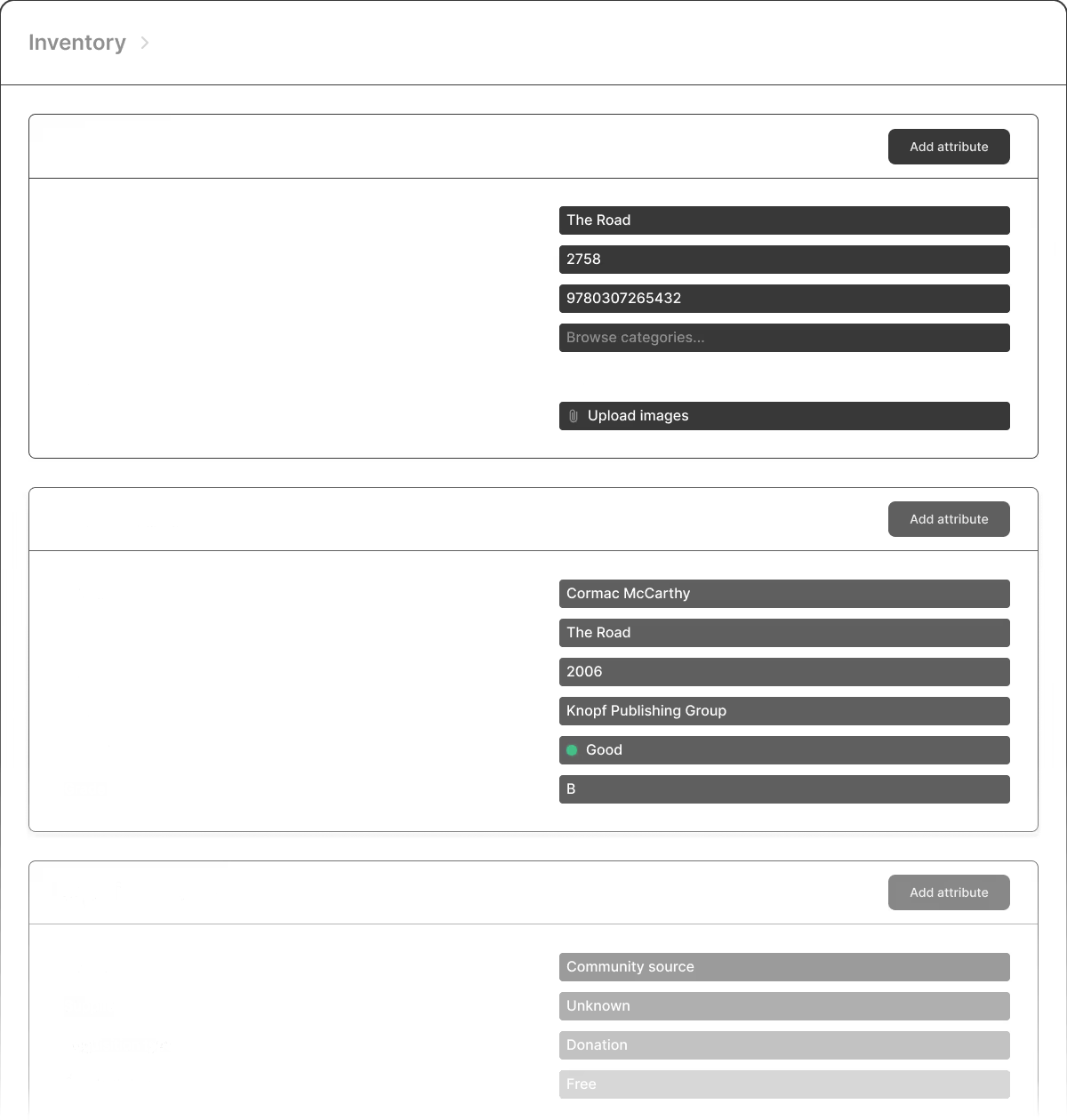
Inspect and grade consistently
From like-new textbooks to well-loved paperbacks and rare first editions, TWICE standardizes how your team grades and documents each copy, so listings are consistent and customers know exactly what to expect.
List fast
Sell across every channel
Increase reach, visibility, and sales by listing books across physical locations, online stores, marketplaces, and social channels from one system built for high-volume resale.
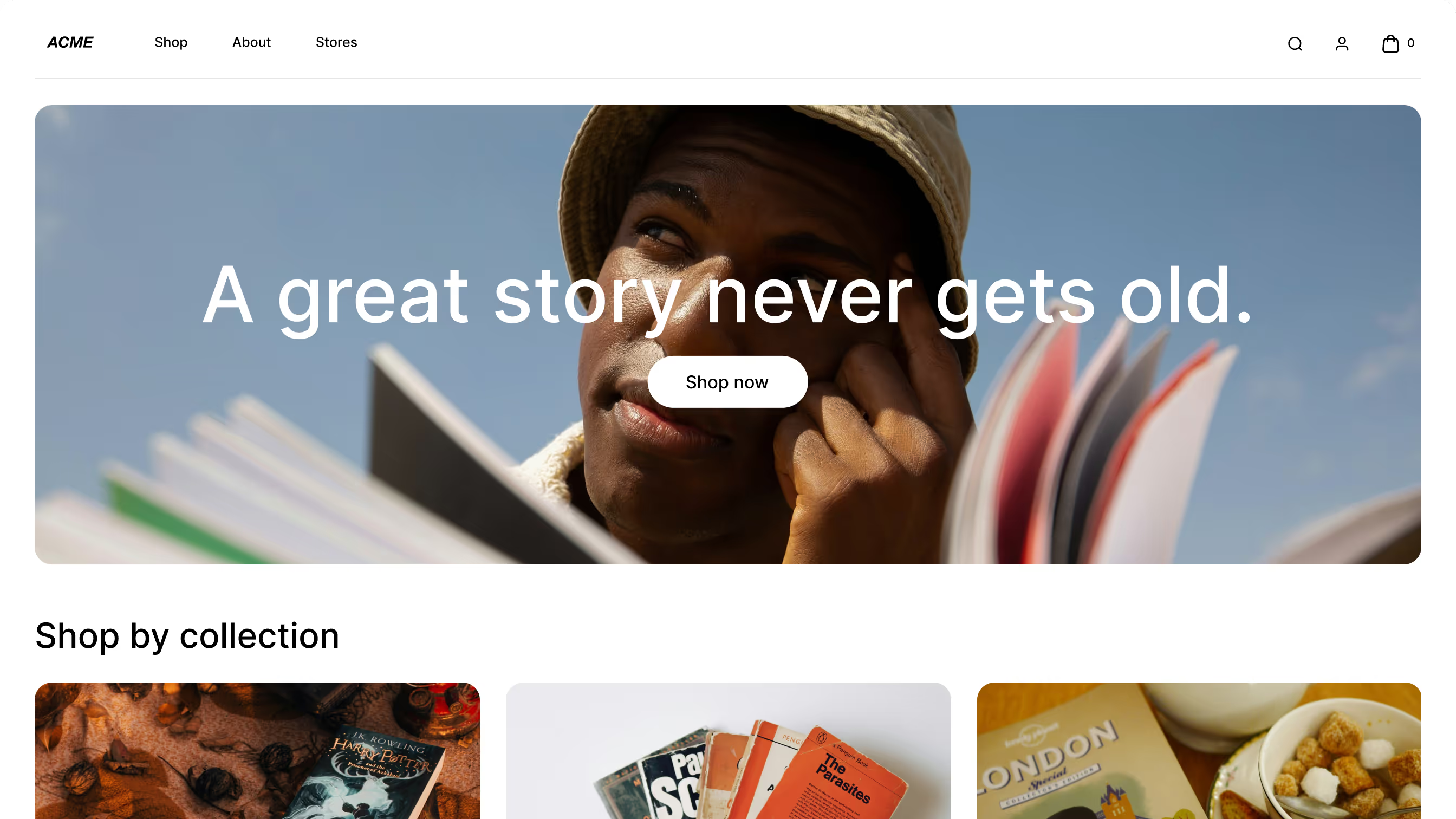
Selling secondhand books is good business. Doing it with TWICE is even better.
From independent bookstores to large retailers, TWICE supports any team selling used books at volume with tools tuned to moving secondhand inventory efficiently.
Independent resellers
Replace spreadsheets and scattered tools with one easy-to-use system that helps you organize book inventory and cross-list items quickly across the book resale channels that matter.
Second-hand bookstores
Streamline intake, pricing, and listing work while expanding from a physical store to online channels, and stand out by offering a more consistent and discoverable buying experience.
Libraries
Launch a book resale or redistribution program that extends product lifecycles, increases access, and creates positive impact from pre-owned library collections.
Campus stores
Launch and manage a campus-led textbook resale and buyback program that improves student affordability, keeps inventory organized across terms, and creates new revenue from pre-owned academic materials.
Frequently asked questions
How does TWICE help manage unique titles and multiple copies of the same book?
TWICE supports both one-of-a-kind books and titles with many copies. Each copy gets its own item record with condition, acquisition source, and cost, while sharing core title data like author, ISBN, and category. You always know exactly how many copies you have, in which condition, and at which locations, without complex spreadsheets.
Can TWICE support donations, trade-ins, consignment, and buyback programs for books?
Yes. TWICE is built to handle multiple sourcing models in one system. You can manage donations, track consignor agreements and payouts, run textbook or general book buyback programs, or purchase inventory outright. All financials — from trade-in credits to consignor splits and margins — stay connected to each item for clear reporting.
Does TWICE connect online and in-store sales?
Yes. TWICE centralizes inventory across your online shop, physical bookstores, pop-ups, and warehouses. Every sale or return updates stock in real time, so you never double-sell a specific copy. In-store POS flows and online checkout stay synced through one backend designed for recommerce.
How does TWICE streamline book intake, cataloging, and pricing?
TWICE allows you to create repeatable processes for scanning, tagging, photographing, grading, and pricing books. You can pull core data with ISBN lookups or templates, then apply standardized pricing rules by edition, subject, demand, or condition. This keeps valuations consistent across staff and locations while still allowing manual overrides for special or rare items.
Can TWICE work with our existing website or eCommerce stack?
Yes. You can keep your current website and use TWICE as the resale engine behind it. Embed your used book catalog, connect via integrations, or run a dedicated resale storefront alongside your main site. TWICE handles inventory, orders, and lifecycle tracking, while your existing site and brand remain front and center.