Software for resellers and collectible stores to sell used baseball cards at scale
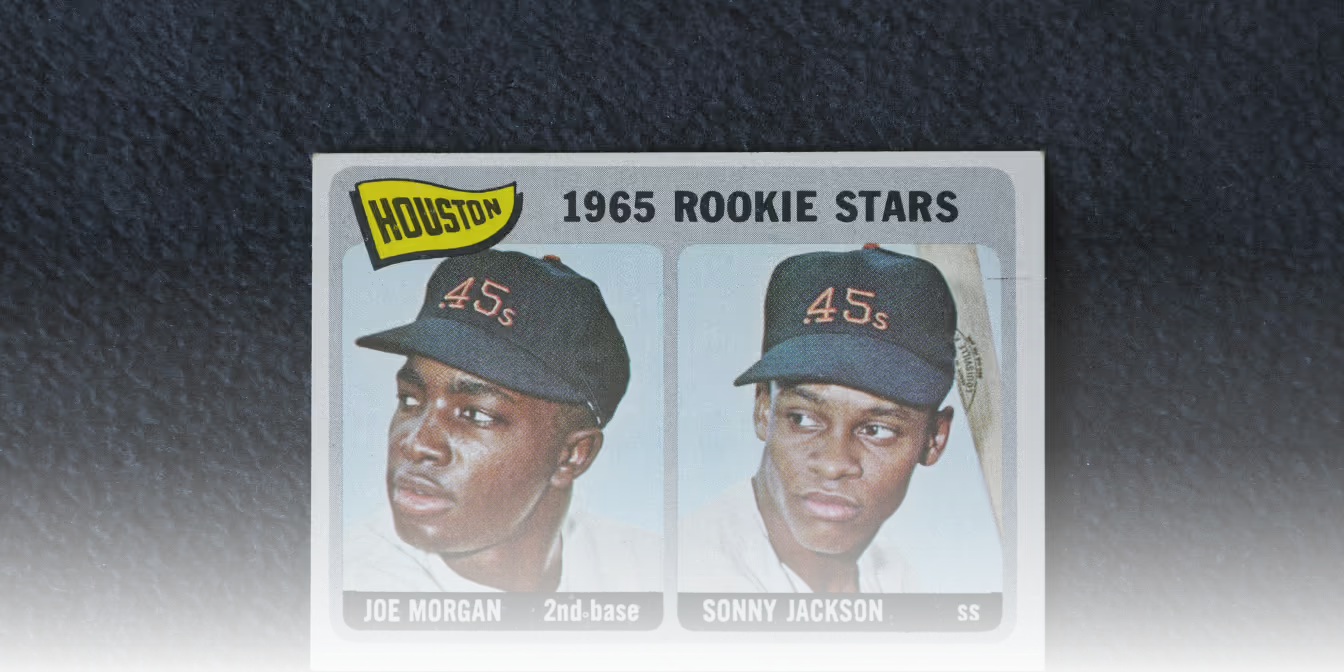
Process supply faster
Intake raw collections, consignments, and trade-ins with fast, structured workflows tailored to cards.
Grade items accurately
Capture condition, grading details, print runs, and provenance consistently at the item level.
List items at scale
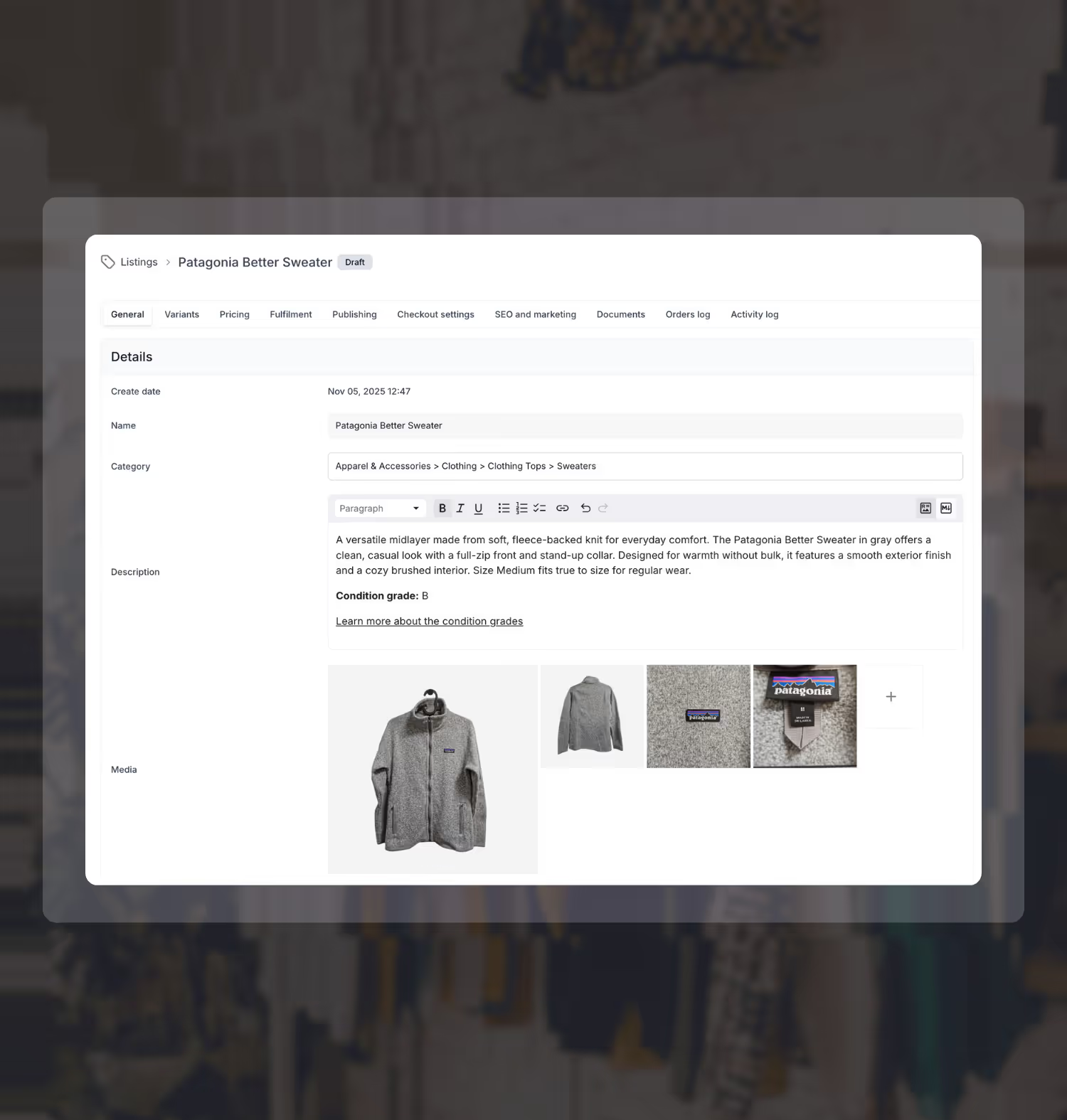
Turn intake data into clean, accurate listings with minimal manual work and fewer pricing errors.
Sell everywhere
Sync inventory across your shop, marketplaces, shows, and auctions with real-time updates.
From sourcing to selling in one continuous flow.
Register resale inventory with structure
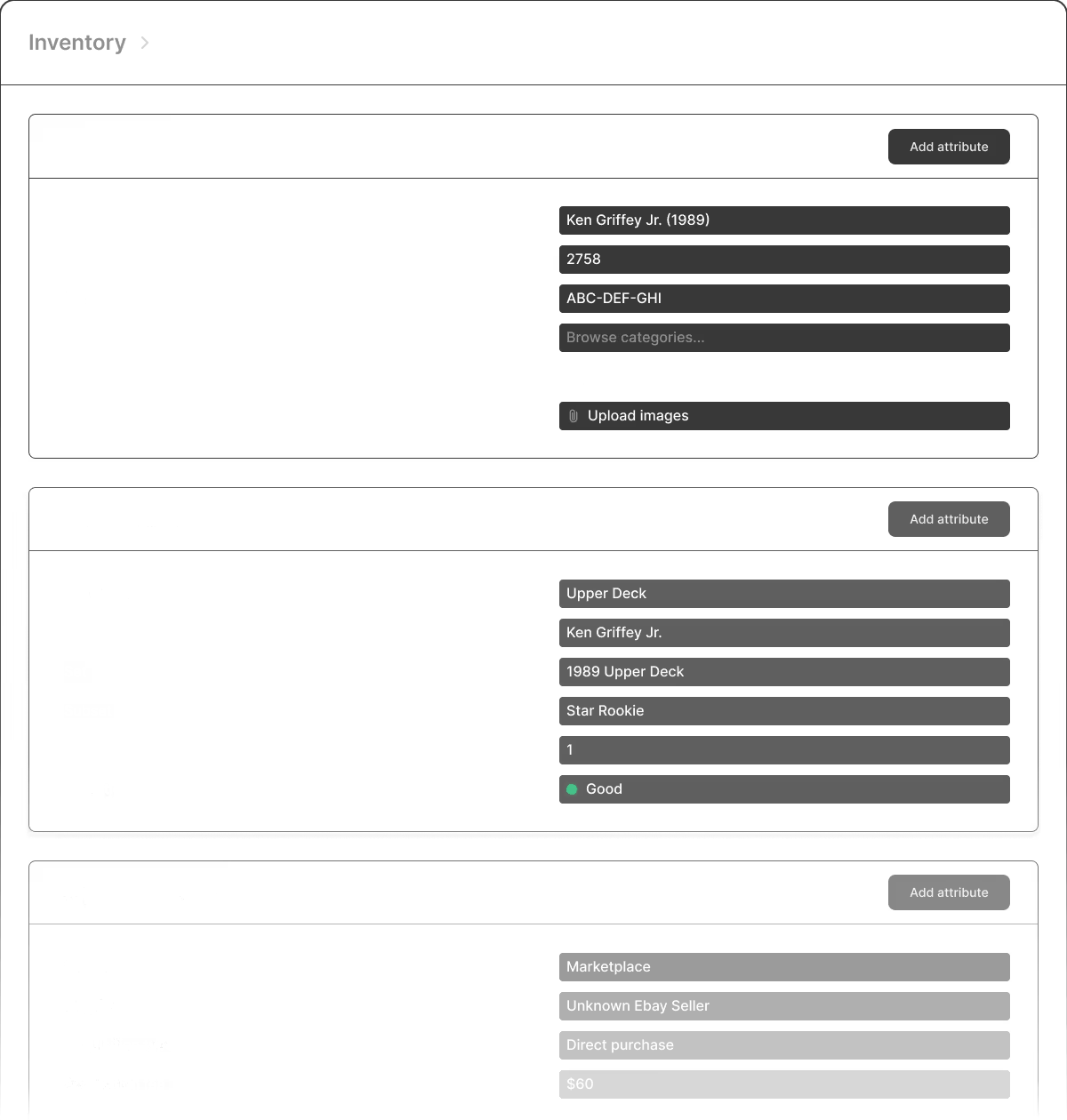
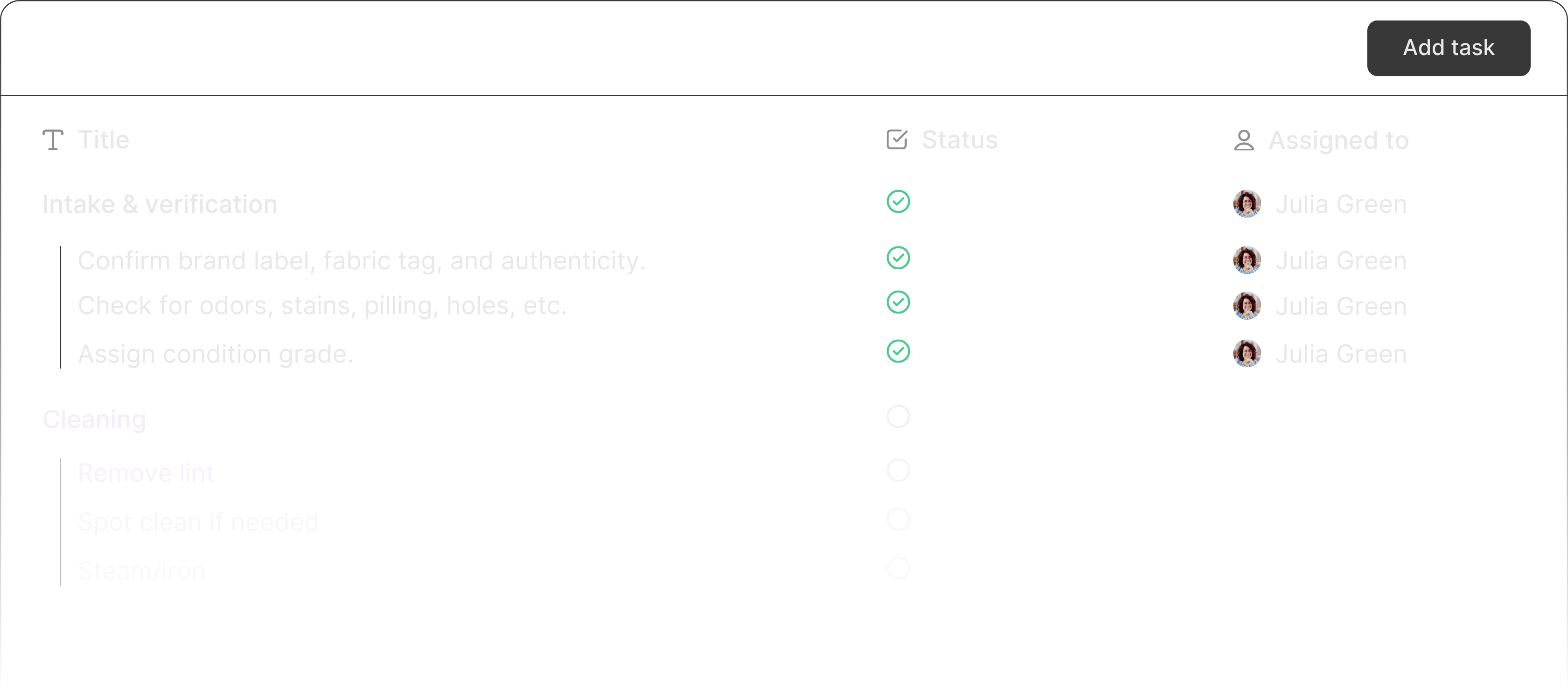
Inspect and grade consistently
Define inspection criteria for baseball cards, document condition and required records per unit, and assign review steps across your team for consistent grading.
List fast
Sell across every channel
Whether you sell in-store, on your own site, at card shows, or through marketplaces and auction platforms, TWICE keeps inventory synced in real time. Cross-list unique cards without double-selling, see orders in one place, and keep fulfillment efficient even as you scale.
Selling old baseball cards is good business. Doing it with TWICE is even better.
From solo dealers to large card shops, TWICE supports any team selling used baseball cards at volume with tools that bring structure, speed, and control.
Independent resellers
Replace spreadsheets and scattered tools with one easy-to-use system that helps you organize baseball card inventory and cross-list items quickly across the collectible resale channels that matter.
Card shops & specialty stores
Streamline intake, pricing, and listing work while expanding from a physical store to online channels, and stand out by offering a more transparent and reliable buying experience.
Auction houses & specialty resellers
Centralize cataloging, documentation, and sales data for unique lots, and reuse structured information across auctions, fixed-price listings, and private sales to increase sell-through.
Frequently asked questions
How does TWICE handle unique, one-of-a-kind baseball cards?
Every card or lot in TWICE is tracked as its own item with serialized IDs. You can store condition notes, grading certs, purchase source, costs, pricing history, and sale data per card. That means you always know what you have, where it is, how it’s priced, and whether it’s listed — without relying on ad hoc spreadsheets or memory.
Can TWICE support both buy/sell and consignment models for cards?
Yes. TWICE is built to handle mixed intake models. You can record buy costs for outright purchases, track consignor agreements and splits, or run trade-in programs where cards are exchanged for store credit. All of these flows live in one system, so your margins, payouts, and liabilities stay transparent and auditable.
Does TWICE support card grading and authentication workflows?
TWICE doesn’t grade cards itself, but it structures the data around your grading processes. You can log internal grades, external grading company info, cert numbers, subgrades, and links to documentation. Attach high-resolution photos, store provenance notes, and keep a complete history as cards move from raw to graded and through multiple owners.
Can TWICE connect my in-store inventory with my online and marketplace listings?
Yes. TWICE centralizes inventory across your physical card shop, warehouse, online store, and events like shows or pop-ups. Stock updates in real time when an item sells in-store or online, helping you avoid double-selling unique cards. Orders from all channels flow into one backend for fulfillment and reporting.
How does TWICE help with pricing used baseball cards?
TWICE lets you set pricing rules by set, era, grade, rarity, and more, while still giving experts room to override for special cases. You can track buy costs, target margins, and historical sale prices to keep valuations consistent. As markets move, you can update rules in bulk instead of editing each listing manually.